

Sober.Coffee Podcast
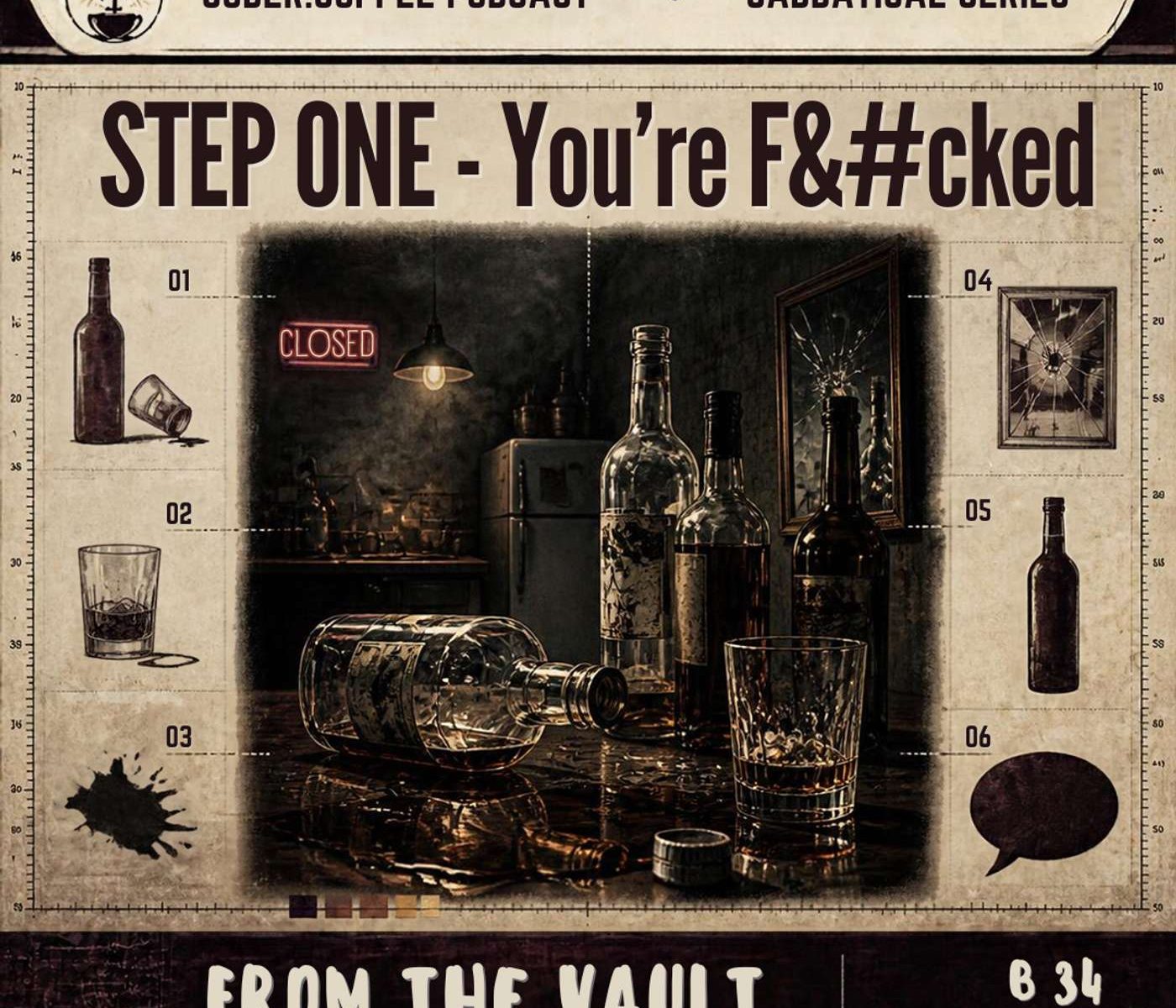
Dr. John – Step One: “You’re F&#@cked”
Series Note: This episode is a re-release in a special series of replays from the Sober.Coffee vault, featuring Mike and Glenn while they take a sabbatical.
Episode Date: October 23, 2022
Hosts: Mike & Glenn
Special Guest: Dr. John
Episode Overview
Mike and Glenn set up a table for three in the coffee shop to welcome longtime friend, physician, and recovery doctor Dr. John. Known for his blunt, straight-shooting wisdom, Dr. John dives into the foundational bedrock of recovery: Step One of Alcoholics Anonymous. Stripping away academic jargon and polite euphemisms, Dr. John breaks the first step down to its raw essence: “Here’s the deal: you’re f&#@cked.” The conversation explores why alcoholism must be treated as a terminal disease of the soul, why 90% of newcomers walk away from AA, and why true recovery requires transformation rather than simple behavioral reform.
The Reality of Step One: A Terminal Diagnosis
- The Clinical Analogy: In medicine, treatment can only be as effective as the diagnosis is accurate. If a doctor shows a patient a brain scan with a malignant tumor, the patient immediately understands that it is a fatal condition requiring complete adherence to treatment. Dr. John argues that alcoholism is no different—it is a progressive, ultimately fatal malignancy of the soul that kills from the inside out.
- The “F&#@cked” Truth: Step One states that we admitted we were powerless over alcohol and that our lives had become unmanageable. Dr. John explains that powerlessness means you are dealing with a terminal illness you cannot fix on your own. Those who fail in recovery are almost always those who do not truly believe or accept what Step One actually means.
- Why 90% Walk Away: Despite AA being free, universally accessible, and widely recognized, roughly 90% of those who walk through the doors don’t stick around. Dr. John notes that while people offer dozens of excuses (bad sponsors, boring meetings, busy schedules), the common thread is failing to surrender to the reality of their condition.
Getting Well vs. Feeling Good
- A Get-Well Program: Many people enter recovery expecting immediate relief, joy, and gratitude. Recalling his own first 18 months of sobriety—where he felt miserable despite outward success—Dr. John shares life-changing advice given to him by an old-timer named Charlie Healey: “Where’d you get the idea this is a feel-good program? You want to feel good, go get drunk… You want to get well, stick around.”
- How You Feel vs. How You’re Doing: Alcoholics are notoriously poor judges of their own condition. Feeling bloated, anxious, or uninspired does not mean you aren’t progressing. If you are doing the work—hitting meetings, calling your sponsor, and praying—you are doing well regardless of subjective emotional swings.
- Insight Isn’t Enough: Traditional therapies often settle for symptom relief or endlessly analyzing why someone is broken. Dr. John points out that “insight and 50 cents will get you a cup of coffee”—knowing why you drink does not heal the disease; taking disciplined action does.
The “ISM”: Powerless Over Alcoholism, Not Just Alcohol
- The Banana Problem: Only alcoholics have to expend mental energy trying to “control” their drinking—normal drinkers don’t manage alcohol any more than someone manages how many bananas they eat.
- Dry vs. Sober: Anyone can manage to keep “the plug in the jug” and stay dry for periods through sheer willpower, but doing dry alone is miserable. We drink not because we are stupid, weak, or bad, but because of what alcohol does for us: it temporarily soothes the internal “ISM” and quiets our baseline fear.
- Transformation vs. Reformation: Reformation is merely compensating through surface behavior—acting like “super husband” or working 16 hours a day to prove you’re better. True recovery is internal transformation. Even after putting the drink down, the underlying fear-based alcoholism remains. AA provides a daily spiritual design for living to treat the soul.
Core Nuggets & Closing Takeaways
- AA is not a feel-good program; it is a get-well program.
- It’s an ISM, not a WASM: The condition remains active even when alcohol is removed.
- Don’t assess your own progress: Rely on sponsors and accountability partners who can “read the label on your jar” when your own vision is clouded.
- When people say AA doesn’t work: The simple reality is that they aren’t working the program. Principles are perfect; people are not.
- Surrender is absolute: Surrendering Step One means acknowledging that self-will has failed and being willing to thoroughly follow the path laid out before you.
Resources & Support
- Website: sober.coffee
- Email: podcast@sober.coffee
- Instagram: @sober.coffeepodcast
- Twitter / X: @sobercoffeepod
- AA Hotline: 1-800-839-1686
- Suicide & Crisis Lifeline: 1-800-273-8255 (or 988)