Hello, Hello, Hello- let’s reevaluate who we follow; “we get to choose.”
Listen in…


Podcast Recording, Editing and Production in Crest Hill, Illinois

Hello, Hello, Hello- let’s reevaluate who we follow; “we get to choose.”
Listen in…
I would love to hear from you. Send me questions or comments.
Caregiving can make you feel strong and completely depleted at the same time. We talk with Otanthea Williams Brady, a sports-certified nurse practitioner, certified life coach, and host of the Making Space for Me podcast, about the reality so many dementia caregivers and family caregivers live with: you handle everyone else’s needs all day, then feel guilty the moment you try to rest.
We dig into why women caregivers often struggle with self-care and self-priority, even when they know they’re running on fumes. Otanthea explains her reframe that lands like a truth bomb: self-priority is not selfish, it is stewardship. From there, we unpack where caregiver guilt actually comes from, how high-achieving “I’ll handle it” traits can push you into caregiver burnout, and what chronic self-neglect does to your physical health, mental health, and emotional well-being.
You’ll also get practical tools you can use immediately: a clear process to move through guilt without letting it control your choices, a life drain audit to spot what’s quietly draining your time and energy, and the RISE framework for burnout recovery and burnout prevention. We also draw a sharp line between occasional self-care practices and the deeper work of building “care of self” into your daily rhythm, even if you only have 15 minutes.
If caregiving has started to feel like your life isn’t your own, hit play and take one small breath of space back. Subscribe, share this with a fellow caregiver, and leave a review so more people who feel alone can find support.
https://www.otanthiawb.com/makingspaceforme
SPEAKER_02
0:17
Welcome
to
Patty's
Place,
a
place
where
we're
going
to
talk
about
grief,
dementia,
and
caregiving.
I'm
your
host,
Lisa.
I
started
this
podcast
in
honor
of
my
mom,
Pat,
who
passed
away
almost
three
years
ago
from
dementia.
I
want
this
to
be
a
place
where
you
know
you're
not
alone,
and
we
can
talk
about
all
the
difficult
subjects
that
nobody
ever
really
wants
to
talk
about.
So
grab
your
cup
of
tea,
your
cup
of
coffee
if
you're
having
that
really
bad
day,
a
glass
of
wine,
and
let's
get
talking
SPEAKER_02
0:39
today.
I'm
excited
today
for
our
guest.
Her
name
is
Otanthea
Williams
Brady,
and
she's
a
sports-certified
nurse
practitioner,
certified
life
coach,
and
host
of
the
Making
Space
For
Me
podcast,
which
is
so
hard
for
caregivers.
So
welcome
to
Patty's
Place.
SPEAKER_00
0:57
Thank
you,
thank
you,
thank
you
for
having
me
on.
SPEAKER_02
1:00
Because
I
think
that
is
probably
one
of
the
hardest
things
for
a
caregiver
to
do
with
it.
So
why
do
you
think
so
many
women
especially
struggle
to
care
for
themselves,
even
though
they
know
they
need
to
do
it?
SPEAKER_00
1:16
Um
I
feel
like
a
lot
of
women
struggle
so
much
to
care
for
themselves
even
when
they
know
they
need
to
do
it.
It's
just
because
we
were
taught
how
to
be
responsible
for
everyone
else.
It's
just
kind
of
what
part
of
our
upbringing
and
learning
how
to
be,
you
know,
a
woman,
a
wife,
a
mama,
things
of
that
sort.
But
I
don't
feel
like
no
one
ever
really
taught
us
how
to
care
for
ourselves.
We
were
taught
to
kind
of
show
up,
fulfill
our
obligations,
handle
what
needs
to
be
handled,
but
no
one
ever
really
taught
you,
you
know,
taking
time
for
you.
And
I
think
we
just
kind
of
we
get
into
this
mode
of
doing
just
because
that's
what
we
know
to
do.
And
by
the
time
we
get
finished
kind
of
taking
care
of
everybody
and
everything
else,
we
just
don't
have
like
the
time,
the
energy,
or
even
the
resources
to
kind
of
pour
back
into
ourselves.
So
we
kind
of
start
neglecting
ourselves
in
a
sense.
And
I
don't
believe
it's
like
a
purposeful
neglect,
it's
almost
like
an
unconscious
omission
in
a
sense
to
where
you've
just
kind
of
been
doing
so
much,
and
next
thing
you
know,
you
realize
it's
been
weeks,
months,
even
years,
and
it's
just
like,
huh,
I'm
kind
of
exhausted,
or
I'm
not
sleeping
well,
or
I'm
not
eating
good,
and
I
just
don't
feel
happy.
And
then
you
kind
of
think
about
things.
It's
like,
when's
the
last
time
I've
been
to
the
doctor?
When's
the
last
time
I
just
kind
of
like
had
a
night
to
myself?
Um,
so
it
just
kind
of
happens
over
time
and
until
you
actually
realize
it,
but
you
realize
it
because
you're
feeling
some
sort
of
way,
and
then
it's
like,
okay,
this
is
what's
going
on,
and
then
you
want
to
do
better,
but
then
you
look
around
and
you've
kind
of
created
this
life
that
heavily
depends
upon
you.
There's
really
not
even
like
a
structure
for
you
just
to
kind
of
have
that
space
for
yourself.
So
um,
yeah,
I
think
it's
just
something
that
we
just
haven't
really,
we
were
never
really
taught
in
terms
of,
you
know,
kind
of
growing
up
about
how
to
take
time
for
yourself,
how
to
still
kind
of
like
prioritize
what
you
need
in
the
midst
of
everything.
We
were,
you
know,
a
lot
of
us
were
taught
to
kind
of,
you
know,
caretake
and
you
know,
do
what
needs
to
be
done.
SPEAKER_02
3:34
Exactly.
I
I
I
like
your
you
say
on
here,
your
message
is
self-priority
is
not
selfish,
it
is
stewardship.
What
do
you
what
does
that
what
does
that
mean?
SPEAKER_00
3:47
I
think
for
a
lot
of
people
who
are
caretakers
and
like
natural
nurturers,
um
we
do
for
everybody
else.
And
we
feel
good
about
what
we
do
for
everybody
else.
Like
we
take
pride
in,
you
know,
being
able
to
care
for
our
parents,
you
know,
our
partners,
our
pets,
our
kids,
whomever.
But
it's
like
the
minute
we
kind
of
turn
some
of
that
inward,
we
feel
selfish.
We,
you
know,
we
we
feel
guilty.
And
so
I
came
up
with
that
self-priority
isn't
um
selfishness,
it's
stewardship,
because
it
is.
It's
just
like,
yes,
you
may
have
a
responsibility
to,
you
know,
your
parents,
your
kids,
even
your
job,
but
it's
just
like
you
have
a
responsibility
to
you
too.
And
I
think
a
lot
of
time
we
forget
that.
Like
if
we
don't
care
for
ourselves,
who
will?
And
while,
you
know,
God
has
placed
many
different
assignments
in
our
lives
to
manage,
like
we
are
our
first
assignment
to
manage,
you
know?
Yeah,
we
forget
that.
So
it
just
kind
of
re-yeah,
we
definitely
forget
that.
So
it's
just
kind
of
reframing
it
and
that
like,
no,
like
prioritizing
your
needs
isn't
saying
that,
you
know,
everything
is
all
about
me,
but
it's
recognizing
that
your
needs
matter
as
well.
And
just
like
you
have
a
responsibility
to
everybody
else
and
everything
else,
you
also
have
a
responsibility
to
you.
Like
you
have
to
care
for
the
person
that's
doing
all
of
the
caring.
Like
you
can't
just
do
for
everyone
else
and
do
nothing
for
you.
That's
not,
I
don't
believe
that's
what
kind
of
God
intended,
even
when
he
gave
us
these
assignments
that
we
have
to
do
that
maybe
take
a
lot
out
of
us.
But
you
are
still
responsible
to
steward
your
health
and
your
life
and
your
well-being.
SPEAKER_02
5:43
And
I
know
for
me,
sometimes
I
like,
you
know,
write
these
lists
and
I'm
chucking
it
off
and
I
think,
oh,
I'll
just
go
do
this
really
quick
and
it'll
be
done.
And
then
like
my
stuff
ends
up
going
farther
and
farther
down
the
list.
And
it's
like,
no,
it's
okay
if
I
don't
do
this
today,
this
errand,
I
can
do
it
later
and
you
know,
spend
time
with
my
friends
or
something
this
afternoon
or
something,
you
know.
But
it's
really
hard
because
you
feel
guilty
prioritizing
over
you
know
what
you
need
over
somebody
else.
Like,
why
do
you
think
women
feel
SPEAKER_02
6:14
that?
Not
that
men
don't.
I'm
sure
there
are
some
men
that
do,
but
I
think
women
tend
to
feel
guiltier
about
it.
SPEAKER_00
6:20
Yes,
yes.
I
I
definitely
feel
like
guilt
plays
a
lot
of
it.
Um,
I
feel
like
guilt
often
shows
up
when
we
feel
like
we
have
like
violated
or
like
broken
some
internal
like
standard
or
expectation
we
put
on
ourselves.
It's
like
we've
been
handed
like
a
lifetime
of
expectations
from
the
beginning
to,
you
know,
as
women
to
be
nurturing
and
to
be
available
and
to
be
accommodating
and
dependable
and
responsible.
And
we
set
up
these
um
expectations
in
our
mind
about
what
it
means
to
be
a
good
wife,
a
good
mother,
a
good
caretaker,
a
good
employee.
Um,
so
I
feel
like
when
we
do
something
that's
maybe
contrary
to
kind
of
what
in
our
mind
we
believe
it
to
be
um
good,
then
we
feel
guilty.
We
feel
bad,
like
we're
doing
something
wrong,
even
though
we're
not,
you
know,
if
that
makes
sense.
So
I
kind
of
feel
like
that's
where
that
guilt
comes
from.
It's
like
we
have
these
standards
and
we
have
these
expectations
that
you
know
we're
trying
to
live
up
to.
And
when
we
do
something
that's
a
little
bit
different
from
those
standards
or
expectations,
it
makes
us
feel
like
we're
doing
something
wrong.
And
that's
kind
of
where
that
guilt
creeps
in.
SPEAKER_02
7:45
I
yeah,
I
understand
that.
Yeah,
it
just
kind
of
does.
You
you
try
to
tell
yourself,
don't
feel
guilty,
but
there's
always
that
little
hint
sometimes
that
yeah,
and
I
dealt
with
that
um
a
SPEAKER_02
7:57
lot.
SPEAKER_00
7:57
So
I
am
also
um
a
caregiver.
I've
had
a
few
different
caregiving
um
since
in
my
life.
At
one
point
in
time,
I
was
a
caretaker
for
my
dad
after
his
kidney
transplant.
And
then
I
was
again
a
caretaker
for
him
after
his
cancer
diagnosis
until
he
passed
away.
And
then
a
few
years
ago,
I
had
a
family
member
in
an
accident
that
suffered
a
traumatic
brain
injury.
So
now
I've
also
been
a
full-time
caregiver
for
that
individual
for
going
on
um
three
years.
And
pending
kind
of
that
caregiver
situation,
I
went
through
like
a
horrible
season
of
burnout,
like
in
every
sense
of
the
word.
The
mental,
physical,
emotional
exhaustion,
um,
the
self-neglect,
the
not
going
to
the
doctor,
not
caring
for
myself,
the
um
feeling
miserable,
feeling
alone.
It
was
a
very,
you
know,
kind
of
dark
season
for
anybody
who's
kind
of
been
there
before.
And
um
part
of
that
was
because
I
was
so
focused
on
everybody
and
everything
and
all
the
new
responsibilities
I
had.
I
didn't
do
anything
for
myself
because
I
would
feel
bad
trying
to
do
something
for
myself
when
there's
so
much
that
needs
to
be
done
and
so
many
people
that
needed
me.
Um,
but
that
obviously
did
not
work
out
well.
So
it
was
like,
okay,
this
isn't
sustainable.
I'm
I
I'm
miserable
and
um
everybody
else
is
good,
but
I'm
not.
So
I
kind
of
had
to
figure
out
how
to
start
working
through
that
guilt.
And
I
did,
I
kind
of
learned,
you
know,
there's
sometimes
that
people
say,
Oh,
you
know,
take
care
of
yourself
and
do
it
with
no
guilt.
I
don't
think
no
guilt
exists.
No,
I
don't
think
so
either.
But
I
feel
like
if
you're
the
type
of
person
that
is
just
a
natural
nurturer
or
caregiver,
that
guilt
is
there,
you
know
what
I'm
saying,
by
default
when
you
try
to
do
something.
But
I
had
to
learn
how
to
not
allow
the
guilt
to
dictate
my
actions,
if
that
makes
sense.
SPEAKER_02
9:57
Yes.
SPEAKER_00
9:58
Like
it's
going
to
pop
up,
but
at
one
point
in
time
it
would
pop
up,
and
then
I
would
let
the
guilt
take
over
and
like,
okay,
I'm
just
not
gonna
do
it
because
I
feel
bad.
Now
it
pops
up,
it's
there,
and
I'm
still
gonna
do
what
I
set
out
to
do.
So
for
myself,
I
kind
of
created
like
um
a
little
framework
that
I
needed
to
kind
of
help
me
move
through
it.
And
it's
like
four
parts.
So
the
first
part
of
it
for
myself
was
kind
of
like
just
being
honest
and
naming
the
guilt.
What
am
I
feeling
right
now?
I
feel
bad
for
saying
no.
I
feel
bad
for
saying
that
I
can't
take
you
today.
You
know,
I
feel
bad
for
going
out
when
you're
at
home,
you
know,
kind
of
things
of
that
sort.
And
then
from
there,
it
was
positioning
the
guilt.
Um,
and
position
it
in
the
sense
of
like,
um,
did
I
really
do
something
wrong?
Like
asking
myself
an
honest
question.
Did
I
do
something
wrong?
Did
I
harm
anybody?
Did
I
drop
the
ball?
Did
I
do
something
to
change
the
trajectory
of
my
life?
Like
saying
that
I'm
not
gonna
take
you
to
the
store
today
because
I'm
tired.
That's
that's
not
wrong,
you
know?
So
it
was
just
kind
of
positioning
it
to
did
I
do
really
do
something
wrong?
And
then
from
there,
it
was
like
identifying
um
kind
of
what
was
underneath
it.
Why
do
I
feel
bad?
Why
do
I
feel
bad
for
saying
that
I
can't
take
you
to
the
store
today?
And
I
thought
about
it,
and
this
because
I
want
to
be
seen
as
dependable.
I
want
who
I'm
caring
for
to
feel
like
they
can
depend
on
me.
And
I
feel
like
when
I
tell
them
I
can't
do
something,
now
I'm
kind
of
like
breaking
that
rule
of,
well,
they
can
fully
depend
on
me.
But
then
I
have
to
even
break
that
down
further.
Does
depending
on
me
mean
I
have
to
be
available
24
hours
a
day?
You
know,
kind
of.
That's
a
good
point.
Yeah.
Um,
and
so
now
it's
kind
of
like
identifying
with
that.
And
so
that
goes
back
to
that
expectation.
So
it's
like
I
set
up
this
expectation
in
my
mind
that
mean
that
being
dependable
means
I
have
to
constantly
be
available.
And
that's
not
sustainable.
No,
it's
not.
And
then
from
there,
the
last
point
was
just
um,
you
know,
speaking
truth
over
it,
not
just
like
a
false,
you
know,
positive
affirmations,
but
speaking
like
true
truth.
Like,
I
am
allowed
to
rest
if
I'm
tired.
Yeah.
You
know,
I'm
like
my
needs
are
valid
as
well.
Like,
there
is
nothing
that
you
need
from
Walmart
tonight
that
we
can't
get
tomorrow.
You
know
what
I'm
saying?
Like,
right.
Yeah,
let's
just
speak
truth.
I'm
allowed
to
rest.
I'm
allowed
to
say
no
sometimes.
So
it
was
a
process,
not
an
easy
process,
but
it
was
a
process
um
that
allowed
me
to
kind
of
work
through
the
guilt
to
where
the
guilt
didn't
keep
me
stuck
in
a
very
unsustainable,
you
know,
kind
of
mindset
and
situation.
SPEAKER_02
13:07
And
why
do
you
think
that
like
cape
very
capable,
high
achieving
women
are
especially
vulnerable
to
the
burnout?
SPEAKER_00
13:16
Um
I
I
think
it's
baseline
personalities,
like
the
things
that
require
someone
to
be,
you
know,
quote
unquote,
kind
of
like
high
achieving
or
successful
and
however
they
define
it,
are
qualities
such
as
being
hardworking,
dependable,
resourceful,
solution
focused,
efficient,
independent.
You
know,
those
are
the
type
of
qualities
necessary
to
achieve,
you
know,
things
in
life.
Um,
but
those
qualities
don't
just
stop
at
your
career.
You
bring
those
same
traits
to
other
areas
of
your
life,
you
know,
your
marriage,
your
caretaking,
your
family,
your
ministry,
kind
of
things
of
that
sort.
And
when
you're
functioning
at
such
a
high
level
in
every
area
of
your
life,
it
becomes
a
lot,
you
know?
So
it's
like
regardless
whether
it's
at
work,
whether
it's
at
home,
whether
it's
in
your
ministry,
you
know,
if
there's
a
problem,
you're
trying
to
solve
it,
if
there's
something
that
needs
to
handle
it,
you
know,
you're
trying
to
handle
it.
And
those
are
the
qualities
that
make
you,
you
know,
successful
in
whatever
realm
you
feel,
you
know,
that
means
or
whatever.
But
it's
like
you
start
doing
that
in
overdrive,
now
you're
vulnerable
to
burnout
because
it's
just
like
you
can't
function
at
such
a
high
level
all
the
time
without
some
sort
of
maintenance.
No
system
is
going
to
work
if
it's
constantly
functioning
at
a
high
level
without
some
sort
of
maintenance.
And
that
maintenance
is,
you
know,
it's
the
rest,
it's
the
stepping
back,
it's
the
recovery,
you
know
what
I'm
saying?
Kind
of
things
of
that
sort.
So
it's
basically
like
the
same
traits
that
make
a
lot
of
people,
you
know,
high
achieving
and
successful
and
very
capable
when
those
traits
are,
you
know,
kind
of
in
like
overdrive,
then
that
predisposes
you,
in
my
opinion,
to
kind
of
like
burnout.
SPEAKER_02
15:13
And
with
the
burnout,
how
can
what
happens
when
chronic
self-neglect
affects
a
woman's
physical,
mental,
and
emotional
health?
SPEAKER_00
15:22
Um
I
mean,
it's
it's
as
simple
as
like
you
can't
care
for
what
you
ignore.
You
know,
sure
you
simply
can't
care
for
what
you
ignore.
So,
you
know,
if
you're
burnout
and
you're
neglecting
yourself,
it's
going
to
affect
your
physical
health
because
it's
going
to
be
even
start
with
the
simple
things,
the
not
eating
well,
or
the
eating
on
the
run,
or
the
foods
that,
you
know,
don't
support
obviously
a
healthy
lifestyle.
You
know
what
I'm
saying?
The
not
moving,
the
poor
sleep.
The
missing
appointments
is
a
big
one.
When
I
was
going
through
my
burnout
journey,
it
was
like
I
was
taking
my
family
member
to
their
doctor's
appointments
like
four
or
five
days
a
week.
I
hadn't
gone
to
the
doctor
in
a
year
and
a
half.
I
hadn't
had
any
of
my
like
regular
like
maintenance
checkups
or
anything
like
that.
Um
and
then
from
a
mental,
you
know,
standpoint,
you
know,
when
you're
dealing
with
that
chronic
exhaustion
and
fatigue,
you
know,
you
have
the
difficulty
concentrating,
you
know,
the
mental
fog,
the
decision
fatigue,
you
know,
the
stress,
the
anxiety.
And
then
even
from
an
emotional
standpoint,
all
of
that
can
compound
sometimes
to
where
you
um
you
feel
resentful,
you
know,
you
feel
frustrated,
you
know,
you
just
kind
of
have
all
of
these
different
um
emotions
going
on.
So
yeah,
when
you
are
neglecting
yourself,
you're
you're
gonna
feel
it.
It's
gonna
affect
your
health
mentally,
physically,
emotionally,
and
you
know,
even
spiritually.
Like,
and
the
thing
about
it
is,
as
caretakers,
we
know
this.
And
the
reason
I
say
we
know
this
is
just
because
we
make
sure
that
the
person
we're
taking
care
of
has
those
needs
as
fulfilled
as
possible.
We're
gonna
make
sure
that
they're
eating
well.
Mom,
you
cannot
have
that.
It's
not
good
for
your
sugar.
We're
gonna
make
sure
that
they're
moving.
You
gotta
get
up,
you
gotta
do
a
little
stretching,
let's
go
for
a
walk.
We're
gonna
make
sure
that
they're
showered
if
they
let
you.
Hold
on.
That's
right.
Um,
we're
gonna
make
sure
to
take
their
medicine,
that
they
go
to
the
doctor.
You
know
what
I'm
saying?
If
they're
sad,
we're
going
to
try
to
find
ways
to
make
them
happy
or
to
make
them
laugh.
If
they
feel
lonely,
we're
gonna
try
to
find
ways
to,
you
know,
uh
help
them
not
feel
so
bored
or
do
something
and
that
brings
them
joy.
We
we
do
that
because
we
know
how
important
that
is
for
their
life.
But
like,
it's
also
important
for
our
life
too.
SPEAKER_02
17:59
It
is,
and
yeah,
we
end
up
going
to
the
bottom
of
the
list
with
it.
How
do
you
SPEAKER_02
18:05
think
women
can
get
to
the
root
of
what
they're
feeling
instead
of
only
managing
those
visible
symptoms?
SPEAKER_00
18:12
Um
getting
to
the
root
of
what
you're
feeling
requires
a
lot
of
um
honest
life
assessment
and
and
and
self-awareness.
And
that's
that
kind
of
digging
deeper
part
that
I
kind
of
said
before.
Like,
we
do
a
lot
of
things
as
caretakers
and
it's
not
just
for
them,
and
the
things
that
we
don't
do
for
ourselves.
And
it's
kind
of
getting
to
the
root
of
that
why.
Like
from
like
an
example,
me
getting
uh
me
trying
to
figure
out
kind
of
why
I
felt
bad
for
not,
you
know,
taking
someone
to
the
store.
It
was
that,
well,
I
want
to
be
seen
as
being
dependable,
and
then
okay,
now
being
dependable
to
me,
I'm
telling
myself
it
means
I
have
to
be
available
all
the
time.
It's
kind
of
getting
to
the
root
of
what's
what's
influencing
you
to
make
the
decisions
that
you've
been
making,
you
know?
And
what
is
really
what's
really
draining
you,
you
know,
because
sometimes
it's
it
could
see
like
the
surface
level
stuff,
but
it's
actually
something
that's
a
lot
deeper
than
that.
I
have
this,
you
know,
this
one
framework,
it's
like
a
life
drain
audit
that
lets
you
look
at
different
areas
of
your
life
in
terms
of
like
your
time,
your
energy,
your
attention,
your
responsibility
drain
to
kind
of
see
where
things
are
really
pulling
from
you,
and
then
from
there
what
you
can
do
with
it.
And
I
feel
like
there's
one
of
four
things
you
can
do
with
it
once
you
figure
out
like
what's
pulling
from
you.
You
can
see
if
you
can
release
it.
Is
it
something
you
can
let
go
of?
Can
you
reduce
it?
Maybe
not
um
pour
into
it
as
much,
maybe
reduce
the
frequency
or
something
like
that.
Can
you
receive
support
for
it?
Or
do
you
have
to
respond
to
it
differently?
Maybe
some
things
can't
be
perfect,
maybe
they
just
have
to
be
good
enough.
Maybe
the
whole
to-do
list
doesn't
get
done
today.
Maybe
you
do
the
one
or
two
things
that
are
pertinent
and
everything
else
waits,
you
know?
So
it's
trying
to
find
a
way
to
structure
your
life
in
a
sense
where
it's
not
as
straining
and
a
little
bit
more
supportive.
And
it's
hard
when
you're
a
caretaker
because
there's
a
lot
of
times
where
you
feel
like
my
life
is
not
my
own.
It
is
true.
It's
very
true.
It's
so
hard.
SPEAKER_00
20:40
Yeah.
But,
you
know,
you
also
have
to
think
about
it
in
the
sense
to
where
this
is
the
only
life
you
get.
This
is
this
is
it,
you
know,
and
that
was
kind
of
what
I
think
kind
of
helped
me
get
from
or
helped
me
start
coming
out
of
my
own
seasonal
burnout
because
I
was
at
like
work
one
day
and
I
work
in
a
hospital.
And
you
know,
and
I
see
patients,
you
know,
in
their
20s,
30s,
40s,
and
50s,
you
know,
pass
away
from
different,
you
know,
things
or
whatever.
And
you
know,
I
had
someone
pass
away
there
was,
you
know,
in
similar
age
to
me.
And
it's
just
like
life
is
very
short
and
unpredictable.
Yes,
yes,
it
is.
And
I
am
miserable.
And
if
I
die
tomorrow,
I
will
be
mad.
I
don't
want
to
die
miserable.
Seriously.
Like
I
want
to
die
miserable,
you
know.
And
it
was
just
like,
this,
this,
this
can't,
this
cannot
continue
to
be
forever.
Like
I'm,
you
know,
I'm
saying
I
pride
myself
on
being
really
good,
you
know,
and
making
sure
that
everybody
else
is
good
and
happy
and
comfortable,
but
I
was
not
doing
it
for
myself.
And
it
was
just
like,
why
is
everyone
else's
comfort
and
well
being
so
much
more
important
than
mine?
And
that's
not
coming
from
a
selfish
place,
that's
just
coming
from
a
real
place.
And
it's
just
like,
I
understand
that,
like
I
said
before,
we
have
these
um
assignments,
and
I
don't
know
why
some
of
us
are
put
into
the
position
to
have
to
caregive
and
you
know
have
these
new
responsibilities
versus
other
people.
You
know,
I
am
obviously
um
a
religious
person,
so
I'm
just
like
it's
it's
God's
will,
it's
his
assignment
for
my
life.
And
I'm
okay
with
that.
But
I
don't
think
that
his
assignment
for
my
life
is
meant
to
completely
um
cause
me
to
sacrifice
myself.
I
don't
believe
that
to
be
true.
Um,
so
it
was
just
like,
okay,
yes,
this
is
the
only
life
I
get.
Like
every
day
that
passes,
I'm
not
getting
that
that
that
day
back.
I'm
getting
like
one
day
closer
to
being
older
and
older
and
older
and
not
here
myself.
So
it's
just
like
I
have
to
find,
I
have
to
find
that
balance,
you
know.
We
have
to
remember
that,
yeah,
yes,
that
the
people
that
we're
caring
for,
we
want
their
life
to
be
well
for
the
duration
that
they
are
here.
But
it's
just
like
we
also
have
to
make
sure
that
our
lives
are
relatively
well
for
the
duration
that
we're
here.
So
that's
really
true.
It's
just
just
kind
of
like
mindset
shift
and
things
of
SPEAKER_00
23:13
that
sort.
SPEAKER_02
23:13
Now,
how
how
can
women
make
time
for
themselves
when
life
is
already,
you
know,
really
busy
or
chaotic?
Like
people
might
say,
This
is
great,
but
I
I
I
don't
have
time
to
do
it.
SPEAKER_00
23:27
I
feel
like
women
are
great
at
making
time
for
what
they
believe
is
absolutely
necessary.
Like
my
son
was
a
football
player
and
he
injured
himself
and
needed
physical
therapy,
and
I
was
like,
oh
my
God,
I
do
not
have
time
to
take
this
board
of
physical
therapy
three
days
a
week
for
an
hour
a
day.
But
it
was
necessary.
So
I
didn't
have
a
choice.
So
it
was
like,
okay,
changing
some
work
schedule,
rearranging
some
things,
X,
Y,
and
Z.
I
found
the
time
to
make
it
happen
because
it
was
necessary.
And
I
think
we
have
to
do
that
for
ourselves
as
well.
Like,
yes,
we
say
I
don't
really
have
enough
time
because
life
is
busy
and
chaotic,
but
it
was
the
same
thing.
If
your
mom,
if
someone
said
that
you're
okay,
your
mom
has
to
go
to
therapy
three
days
a
week,
blah,
blah,
blah,
for
an
hour,
you're
gonna
find
the
time
to
take
her.
If
someone
else
needed
something
from
you,
you're
gonna
find
a
way
to
make
that
time.
So
I
think
we
just
have
to
put
some
of
that
same
energy
towards
ourselves.
Like
we
find
a
way
to
make
time,
and
it
doesn't
have
to
be
huge
chunks
of
time
because
you're
not
gonna
have
huge
chunks
of
time,
but
just
small
carved-out
moments
where
it's
you
know,
a
15-minute
walk
or
just
kind
of
eating
by
yourself
and
not
multitasking.
And,
you
know,
I
know
other
people
aren't
great
with
helping,
but
you
know,
if
you
can
get
other
people
to
assist,
and
sometimes
like
um
appointments,
you
know,
like
I
every
once
in
a
while,
I
was
I
didn't
have
a
lot
of
super
lot
of
help
or
whatever,
but
if
I
had
an
appointment,
I
could
get
someone
to
kind
of,
you
know,
kind
of
watch
things
for
a
minute.
I
would
sometimes
tell
people
I
have
an
appointment.
It
is
not
their
business
that
the
appointment
was
with
me,
you
know?
Right,
right.
But
it
was
an
appointment
nonetheless
or
whatever.
So
um,
like
I
said,
we
know
how
to
make
time
for
things
that
are
necessary.
I
think
we
just
have
to
kind
of
deem
time
for
ourselves
as
necessary
and
and
make
that
appointment
with
ourselves
and
and
put
it
on
a
calendar,
just
like
you
know,
we
would
put
a
doctor's
appointment
on
and
you
know,
just
kind
of
try
to
figure
it
out
from
SPEAKER_00
25:40
there.
SPEAKER_02
25:40
And
I
think
a
lot
of
times
people
think,
oh,
self-care
is
like,
oh,
you
go
get
a
massage,
or
you
know,
you
you
go
to
the
spa
or
you
get
your
nails
done,
which
all
those
things
are
great
too,
if
that's
what
helps
you.
But
sometimes
it,
like
you
said,
making
an
appointment
with
yourself.
Sometimes
it
might
just
be,
you
know
what,
tonight
I'm
binge
watching
my
favorite
show
and
I'm
not
gonna
feel
guilty.
And
it
makes
you
feel
better
sometimes.
Whatever,
like
you
said,
or
go
for
a
walk,
or
you're
just
sitting
there
and
you
know
what?
I'm
gonna
play
my
game
right
now,
and
I'm
just
blocking
the
world
out.
If
you
know,
or
I'm
taking
a
nap.
Sometimes
that's
you
know,
sometimes
that's
what
you
need.
It
doesn't
have
to
be
this
big
extravagant
self-care
thing
that
people,
you
know,
sometimes
people
think
it
has
to
be.
SPEAKER_00
26:21
Yeah,
yeah.
I
would
100%
agree
that
it
doesn't
have
to
be
those
things.
And
I
don't
know,
I
feel
like,
like
you
said,
I
agree
those
things,
they
are
good
and
they're
necessary
and
they're
helpful.
But
I
that
I
don't
think
that
that's
enough
in
a
sense,
because
I've
had
those
times
before
to
where,
yeah,
I'm
stressed,
I'll
go
get
a
massage.
I
couldn't
enjoy
my
massage
because
I'm
thinking
about
everything
I
need
to
do
when
I
get
home.
You
know,
it's
just
like
you're
in
these
moments,
but
you
can't
even
like
enjoy
them
because
you're
so,
you
know,
full
of,
okay,
I
need
to
do
this,
I
need
to
do
that.
You
know,
I'm
still
just
as
tense
leaving
when
I
was
when
I
got
there
or
whatever.
Right.
And
so,
you
know,
why
there's,
I
think,
space
for
self-care
practices,
in
my
opinion.
I
think
the
biggest
thing
is
learning
to
um
learn
to
have
care
of
self.
And
for
me,
that's
a
little
bit
different
than
like
the
self-care
practices,
the
spas,
the
massage,
whatever.
That
care
of
self
is
kind
of
like
creating
a
rhythm
to
where
you
are
included
in
your
own
life,
to
where
there
really
is
space
for
you
to
just
do
the
simple
things,
to,
you
know,
take
a
long
enough
shower
without
trying
to
rush
and
get
out
or
just
sit
down
and
actually
eat
and
enjoy
your
food
without
multitasking
or
kind
of
figuring
out
the
next
appointment.
Like
to
me,
care
of
self
goes
a
lot
deeper
than
self-care
practices
because
like
those
self-craft
practices,
they
can
help
for
that
small
moment,
but
it's
like
the
minute
that
moment
is
over,
you
kind
of
back
to
all
the
same
heck
that
caused
you
to
need
that
moment
in
the
first
place,
you
know.
Right,
right.
So
it's
like
trying
to
create
a
rhythm
that,
you
know,
just
just
creates
a
little
bit
more
support
and
sustainability.
SPEAKER_02
28:22
I
would
agree
with
that
a
hundred
percent.
Like
I
like
sometimes,
like
for
me,
it's
okay,
this
night,
I'm
just
watching
whatever
TV
show
I
want
and
I'm
blocking
the
world
out.
And
I
find
sometimes
when
I'm
able
to
do
that,
then
the
next
day
I
feel
a
lot
better
because
like
I
just
did
that.
That's
you
know,
I
didn't
I
didn't,
I
I
I
felt
relaxed
at
that
point
and
I
took
a
little
time,
you
know,
just
for
me,
and
it
helped
with
it.
Yeah,
you
know,
something
simple
with
it.
What
SPEAKER_02
28:49
do
you
think
are
some
practical
steps
women
can
take
to
recover
from
burnout
or
prevent
it
or
before
they
get
to
that,
you
know,
breaking
point
where
they
start
crying
over
something
and
they
don't
even
know
why
they're
crying.
SPEAKER_00
29:00
Yeah.
Oh
my
gosh.
Yeah,
it's
um
yeah,
burnout
ain't
caregiving.
It's
it's
it's
it's
a
lot.
And
I
know
you
had
your
experience
with
caregiving,
and
it
is
definitely
um,
it's
definitely
a
lot.
Um,
in
terms
of
like
preventing
or
um
recovering
from
burnout,
again,
I
um
kind
of
went
through
my
own
journey
and
just
kind
of
self-reflected
back.
I
did
a
lot
of
journaling
when
I
was
in
my
season
of
burnout,
which
was
very
beneficial
because
as
I
was
able
to
come
out,
I
was
able
to
kind
of
look
back
and
see
the
things
that
I
was
dealing
with,
the
emotions
that
I
was
feeling
and
how
I
was
kind
of
making
it
kind
of
from
day
to
day.
Um,
but
I
did,
I
per
created
like
a
little
framework
called
um
Rise
or
whatever,
in
terms
of
like
burnout
prevention
and
um
recovery.
And
the
R
stands
for
recognize
what's
been
normalized.
So
what's
been
normalized
are
things
like
the
exhaustion,
the
tension,
the
overfunctioning,
the
constant
mental
load.
Like,
you
know,
when
you're
in
those
heavy
seasons,
that's
almost
that's
your
day-to-day
for
a
lot
of
people.
So
it's
just
kind
of
recognizing,
yeah,
the
exhaustion,
the
tension,
the
overfunction,
this
mental
load,
this
running
from
one
responsibility
to
the
next,
we've
kind
of
normalized
it
as
just
just
is
what
my
life
is
right
now.
But
just
because
we've
gotten
used
to
it
and
we're
surviving
that
day-to-day
doesn't
mean
it's
healthy
and
it
doesn't
mean
it's
sustainable.
So
it's
first
just
kind
of
recognizing
kind
of
what
you've
normalized,
and
then
the
I
is
the
identifying
the
um
internal
pressures,
and
that's
that
why
underneath
that
I
was
talking
about
before.
Like,
you
know,
why
am
I
functioning
the
way
I'm
functioning?
Why
do
I
feel
that
if
I
don't
handle
it,
it
won't
get
done?
You
know
what
I'm
saying?
Why
is
it
my
job
to
handle
this?
Why
do
when
I
set
a
boundary,
I
feel
selfish
and
I
feel
bad?
Like,
what
standards
am
I
trying
to
live
up
to?
You
know,
what
expectations
of
myself
do
I
have?
And
do
they
even
work
in
this
season
of
my
life?
And
where'd
it
come
from
in
the
first
place?
That's
that's
the
thing
about
it.
Because
a
lot
of
things
that
we're
living
up
to,
like,
um,
we
don't
even
know
where
they
came
from.
You
know,
like,
yes,
like
you
may
have
the
expectation,
like,
okay,
to
be,
you
know,
a
good
woman,
I
need
to
have
a
clean
house
and
I
need
to
cook
three
home
cooked
meals.
Like,
where
did
that
come
from?
You
know,
that
was
that
something
that,
you
know,
you
maybe
you
seen
growing
up,
or
you
know,
I'm
saying
women,
you
know,
you
know,
older
kind
of
taught
you
what
you've
seen
from
society.
And
does
that
even
fit
your
life
right
now?
It
may
not.
It
may
require,
you
know,
some
meals
that
you
order
in
and
a
housekeeper,
like,
you
know
what
I'm
saying?
So
we
can't,
you
know,
be
in
these
situations
and
live
by
these
standards
that
just
don't
fit
our
life
or
our
current
seasons.
So
it's
just
that
kind
of
identifying,
like
I
said,
these
pressures,
you
know
what
I'm
saying,
that
we're
that
we're
living
by.
And
um,
and
then
from
there,
the
S
is
the
self-priority
as
stewardship.
It's
that
mindset
shift
and
remembering
that
you
are
responsible
for
you
as
well,
that
you
cannot
continue
to
neglect
yourself
or
abandon
yourself
for
the
sake
of
your
responsibilities.
Just
like
you
have
a
responsibility
to
them,
you
have
a
responsibility
to
you
too.
Your
needs
matter,
your
health
and
well-being
matter
as
well.
And
then,
like
the
E
portion
of
that
is
just
to
establish
a
life
that
supports
you.
Because
I
mean,
you
can
be
aware
of
all
of
the
things
that
are
going
on
that
aren't
working
well,
but
if
you're
not
doing
anything
differently,
life
is
going
to
stay
the
same.
And
that's
kind
of
like
that
for
R
thing.
That
okay,
is
this
something
I
can
release?
Is
there
something
I
can
reduce?
Is
there
something
I
can
receive
support
for?
Or
is
there
something
that
I
just
need
to
respond
to
differently?
You
know,
sometimes
it's
how
we,
you
know,
respond
to
the
situation,
you
know,
maybe
you
know,
I
can't
take
this
as
personal,
or
maybe
I
just
need
to,
you
know,
shift
how
I
view
it,
kind
of
things
of
that
sort.
Because
I
mean,
at
the
end
of
the
day,
a
lot
of
your
responsibilities
aren't
going
anywhere.
They're
not.
Right.
They're
just
there,
you
know.
Um,
so
it's
just
trying
to
figure
out,
you
know,
I'm
saying,
can
I
carry
this
differently?
Like,
how
can
I
still
create,
you
know,
a
life
that
somewhat
supports
me
even
in
the
midst
of
all
of,
you
know,
the
responsibilities
and
everything
like
that
that
I
handle.
SPEAKER_02
33:53
That's
very
true.
That's
a
good
good
thing
to
think
about
for.
So
SPEAKER_02
33:57
if
our
if
my
listeners
want
to
get
in
touch
with
you,
what's
the
best
way
for
them
to
get
in
get
in
touch
with
you?
SPEAKER_00
34:04
Um,
so
my
podcast
is
called
Making
Space
for
Me.
It's
on
all
major
podcast
um
platforms.
And
then
uh
my
Instagram
is
at
Otantia
O
T
A
N
T
H
I
A
W
B.
And
there
they
can
um
also
kind
of
follow
me,
send
messages,
and
then
there's
a
link
to
different
offers
and
uh
resources
that
I
provide.
SPEAKER_02
34:28
Okay.
Well,
now
make
sure
that
uh
we
will
put
the
link
on
there
too,
so
people
can
click
on
it
too
with
the
with
the
show
and
everything,
so
they
can
get
in
touch
with
you.
This
has
been
so
enlightening.
Things
that
I
needed
to
hear
as
well
today
for
it.
So
thank
you
so
much
for
joining
us
today.
So
hopefully,
caregivers
will
realize
it's
okay
to
take
a
little
bit
of
time
because
it's
just
a
very
hard
journey
when
you're
a
caregiver.
SPEAKER_00
34:54
It
it
is
a
hard,
like
I
said,
it's
a
hard
journey.
I'm
still
obviously
um
living
it
now,
but
I
have
learned,
you
know,
with
a
little
time
to
create
a
little
bit
more
breathing
room,
you
know,
for
myself.
Because
um,
yeah,
if
you
don't
take
care
of
yourself,
it's
gonna
be
hard
to
take
care,
it's
gonna
be
hard
to
take
care
of
others.
And
the
same
way
you
said
the
night
that
you
will
watch
something
the
next
day
you
felt
a
little
bit
better,
you're
able
to
show
up.
You
know,
you're
able
to
show
up,
you
know,
as
a
better
version
of
yourself
when
you
have
those
times
to
where
you
can
actually
care
for
yourself.
SPEAKER_02
35:29
Yes.
Very
good
things
to
remember
for
that.
So
thank
you
so
much
for
joining
us
today.
Uh
thank
you.
It's
been
very,
very
enlightening.
So
hopefully
you've
enjoyed
this.
You've
got
some
good
tips
as
a
caregiver
to
know
it's
okay
to
take
time
for
yourself
for
it.
So
hopefully
you
enjoyed
your
cup
of
coffee,
your
cup
of
tea,
or
if
you're
having
that
really
bad
day,
a
glass
of
wine,
and
you
took
a
took
a
little
time
for
yourself
right
now.
And
please
join
us
for
another
edition
of
Patty's
Place.
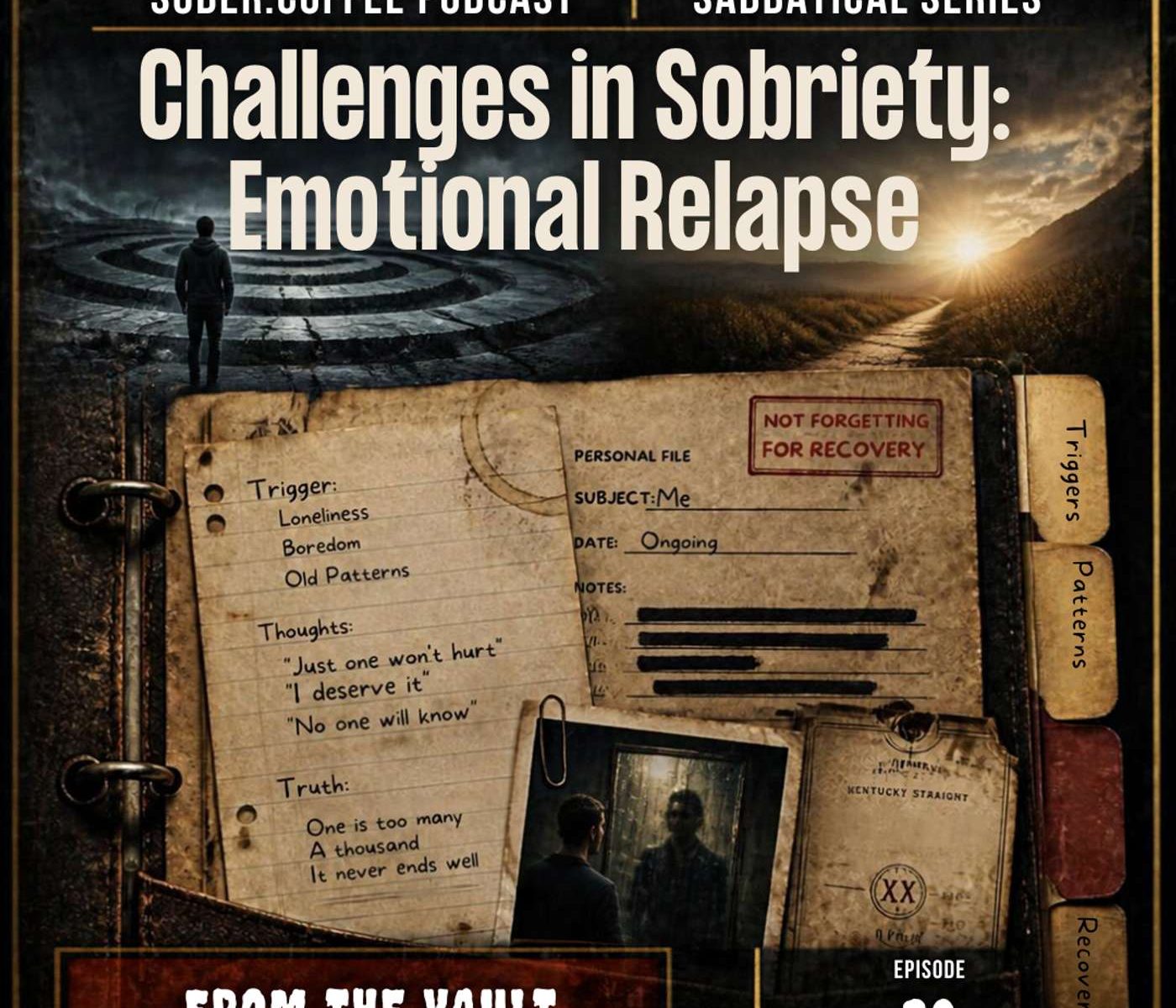
Challenges in Sobriety: Emotional Relapse (Restless, Irritable, Discontent) – From the Vault
Series Note: This episode is the fifth release in a special series of replays from the Sober.Coffee vault, featuring Mike and Glenn while they take a sabbatical.
Sober.Coffee Podcast (Episode B31)
Hosts: Mike & Glenn
Episode Overview
Mike and Glenn settle into the coffee shop to explore the subtle warning signs that precede a physical slip: emotional relapse. Drawing from recovery literature and personal experience, they unpack the famous phrase from the Doctor’s Opinion in the Big Book—describing alcoholics as “restless, irritable, and discontented” until they seek relief. The hosts discuss how to recognize when you are running “off,” why internal emotions cannot always be trusted, and how objective tools and accountability keep you grounded before a relapse takes physical form.
The 3 Stages of Relapse & The “First Five Minutes”
Subjective Feelings vs. Objective Truth
Key Recovery Tools: From “Faking It” to “Acting As If”
Resources & Contact
You can listen to the full episode discussion on YouTube via Challenges in Sobriety: Emotional Relapse. This recording directly covers Mike and Glenn’s conversation on identifying emotional relapse and breaking the cycle of restlessness, irritability, and discontent.

The guys discuss why Damon intends to foil any attack with his most “adequate” weapon, when 23,033 slaps will most definitely lead to salmonella, and how the most wanted pigeon in India is just really bad at following directions.
Are outdated injury advice and myths delaying your recovery? In this video, Dr. Gerry (Doctor of Physical Therapy) breaks down the top 3 injury myths that need to die…icing, resting, and rushing to get an unnecessary MRI.
Learn why the R.I.C.E. protocol is officially dead, how icing stalls tissue healing, why “waiting” is a terrible rehab strategy, and how the modern P.E.A.C.E. & L.O.V.E. protocol uses movement to rebuild physical capacity and futureproof your body against future injuries.
TOPICS & TIMESTAMPS:
0:00 – The Outdated Injury Advice That Needs to Die
1:40 – We Are Organisms, Not Robots: Why Loading Tissues Matters
2:37 – Myth #1: Why Icing Delays Healing & The Flaw of R.I.C.E.
4:51 – Myth #2: Why Resting Until Pain Goes Away Destroys Capacity
6:15 – The Traffic Light System for Movement & Pain Thresholds
8:03 – Art of PT (1-on-1 Sports PT in Naperville, IL)
8:52 – The P.E.A.C.E. & L.O.V.E. Protocol Breakdown
13:35 – Myth #3: Why You Don’t Need an MRI Right Away
14:53 – What MRIs Actually Show: Normal Age Changes vs. True Tears
17:37 – Rebuilding Physical Capacity & Long-Term Resilience
19:02 – How We Work With Athletes & Active Adults (In-Person & Remote)
For sponsorship or business inquiries reach out to artofptsports@gmail.com
For podcast inquiries, please DM me @aptdoctorg on Instagram!
CONTACT ME FOR A FREE VIRTUAL INJURY CONSULT ►
https://www.artofpt.com/contact-us
SUBSCRIBE TO THE PODCAST ► https://www.youtube.com/@Aptdoctorg
FREE NEWSLETTER FOR FITNESS TIPS ►
https://artofpt.beehiiv.com/?modal=signup
YOU CAN ALSO DM ME FOR A FREE VIRTUAL INJURY CONSULT ►
INSTAGRAM: https://www.instagram.com/aptdoctorg/
LISTEN ON ►
SPOTIFY: https://open.spotify.com/show/4Of8unVsmO8Y6zkdaXRION?si=228585bdb503435e
APPLE PODCASTS: https://podcasts.apple.com/us/podcast/the-art-of-wellness/id1774606956
DISCLAIMER: All content is for educational & entertainment purposes only and does not constitute medical/PT advice or establish a provider-patient relationship. Consult your doctor before starting any exercise program.
#injurytreatment #physicaltherapy #painrelief #rehabilitationtherapy #injuryrecovery #injury
And for decades, the standard was the rice protocol, right? Just rest, ice, compression, and elevation. And even the doctor who came up with it, Dr. Mkin, I believe his name is, the creator of the rice protocol, said it’s outdated. So why are we still using it? Why is this still a thing in rehab or injury? And what he said was was he retracted the recommendation and even said that it delays healing, which makes sense if you think about it. Inflammation isn’t an error. Inflammation is supposed to happen. It’s a necessary part of tissue repair and tissue healing. And if you think about it, ice constricts blood vessels, right? It freezes everything. So when you freeze it, it helps numb the pain like we talked about earlier. At the same time, you’re just leaving those cells in there. Those that inflammatory soup is not going anywhere. It’s stuck because you’re freezing it. You essentially want to be flushing those things out, right, for better healing. So, icing doesn’t really help the inflammation process. If anything, it stalls it. So, instead of icing, what we now recommend as physical therapists is an active approach, right? lightweight, pain-free movement. It acts as a natural pump muscle contractions to flush out the inflammation as opposed to just icing it and freezing it and keeping it in there longer. And again, all this muscle contractions, natural movement acts as a natural pump for the lymphatic system, which is the the fluid that travels throughout your body collecting waste, flushing things out. And again, light movement, muscles contracting is much better than just icing it and freezing the inflammation process. And again, if you think about it, it kind of makes sense. Um, so we shift from the rice protocol to something we’ll talk about later, which is called the peace and love protocol, but we’ll come back to that in a second. But, so that’s the first myth is just some hurts. Well, let me ice it. Let’s stop doing that.
The second myth is resting until the pain just goes away. Just waiting just, you know, my back hurts, let me just lay down and do nothing. Or my knee hurts, let me just not walk. Uh, not good rehab plan. That’s not a good rehab plan at all. So, how do you keep your physical capacity when you do have pain or injury? Again, you need an active approach to rehab. Meaning, you need to be moving and exercising, but of course, in a safe manner. And that’s where the physical therapist comes in. That’s our job to show you these things to build capacity, not lose um that physical capacity that you need to further futureproof yourself for injury. When you stop moving because of pain, when you stop doing everything and just wait the pain out, tendons lose stiffness, muscles atrophy or get smaller, your nervous system, your CNS turns up the sensitivity signals because it sees all movement as dangerous. And that’s not a good thing. You don’t want your body to be afraid of like when you have back pain of bending over again. I see it every day. People are super afraid of bending over again. and that becomes a threat to their system and it’s not a good thing. So you want to be actively avoiding and not doing anything. And what you need to do instead instead is find find good gentle feel-good movements. And again, that’s kind of our job as physical therapists to show you these things. But good rule of thumb is if the pain on your subjective pain scale, you know, the the usual zero out of 10 pain. If the pain is less or around a three out of 10, that’s usually a green light. You can move. It’s safe. It hurts a little bit, but it’s safe. It’s not going to cause any further damage, which people are so afraid of. It was going to hurt me again or it’s going to damage myself even more, which is not true. Or so that’s more green light or yellow light. It’s more three to three to six out of 10 pain, which we probably have to modify it a little bit and that’s okay. Usually around a five, we can modify it. Anything above a five or a six, we just scrap it. We try something else. We come back to that movement or exercise. And again, that takes communication with your your PT. You have to find these things with your physical therapist. But generally speaking, if the pain is around, you know, less than a 5 out of 10, less than a four out of 10, you’re safe. Above a five or a 6 out of 10, we probably have to ditch it, modify it, try something else. So, a little bit of pain is okay. Too much pain is is a red light. Don’t do it. Controlled movement reassures your nervous system that the tissue is safe, that the movement is safe, and it also dampens the alarm signals, which is what you want. Maintaining again tissue health, joint health, as opposed to doing nothing where that doesn’t give you the the tissue health or the joint health that you want because nothing’s happening. There’s no fluid movement, there’s no circulation, there’s no adaptation, which is what the human body requires.
Quick pause. This video is brought to you by Art of PT. It’s my physical therapy practice here in Neapville, Illinois. It’s all personalized. It’s all individualized. It’s all one-on-one physical therapy. So, if you are an athlete or someone who does the high rocks or plays a lot of pickle ball or jiu-jitsu person or combat sports, you go to the gym all the time, you’re around Neapville and something hurts, I’m here to help. Come check us out. Again, it’s all personalized. It’s not the like the usual corporate physical therapy place where the PT see three patients at once. It’s all individualized to you. So check us out. It’s artf.com. The link is in the description. It’ll go right to us. Tell us your story. We’ll get you back to 100%. I promise.
Back to the episode. Let me circle back to the peace and love protocol which we have an infographic here. So if you look at it, it’s quite literally peace and love, right? Instead of the whole rice protocol. So I feel like us as physical therapists or people in the rehab department of healthcare, the rehab section of healthcare, we hopefully we know this by now and we’re telling our patients this, but I don’t think it’s something that the mainstream, you know, YouTube space or the mainstream social media space talks about a lot. they still kind of they’re stuck in that rice protocol just resting it, icing it, waiting for the pain to go away. So, let’s kind of walk through this a little bit. So, going back to the protocol, the P is protect, right? Which means again protection. That doesn’t mean stop everything. Continue moving, but focus on light movements, gentle movements, elevate, self-explanatory. The A is one where I is where people kind of are shocked by. But the A is stands for avoid any anti-inflammatories, which again we’ve been taught or we’ve been hurt, we’ve heard so many years that anti-inflammatories are good for any type of pain, right? And there’s again there’s some good research showing that NSAIDs and again icing don’t help the inflammatory process. it actually delays tissue healing. So, we want to avoid those things. C in the piece part of the protocol is compression. Again, pretty self-explanatory. E is for education, which means trust your body and the healing process. Focus on again light active treatment and avoid passive treatment. Passive treatment, meaning again, doing nothing or going to your physical therapist and just wanting a massage and doing nothing and having the rehab provider do everything for you. That’s a passive approach to your injury rehab. That’s something you want to avoid because eventually you want to get back to your sport, to the gym, to walking again, to to moving again. Passive treatment will not help that. The L stands for load, meaning you have to load those tissues that are healing. I know it’s it sounds not good. It sounds like you’re going to be hurting yourself more, but again, your tissues need load at the appropriate dosage, and that’s key. O stands for optimism. Again, sounds kind of woowoo. It sounds like, oh, well, I should be feeling I should feel good, positive outlook, but again, there’s good research showing that a positive outlook on your health helps pretty much everything. So that’s something that should definitely be in your back pocket when recovering from an injury or pain. So that’s optimism. That’s O. V. V is vascularization. Meaning you want more blood flow to the area, right? Tissues repair and get better and heal and desensitize with more blood flow, not by sitting and doing nothing. And pain-free. The the V here stands for like pain-free cardiovascular activities. I mean, you could throw anything in there, like even just light walking, light elliptical, light bike, light movements that your PT has taught you, and ease, of course, exercise, which, you know, again, I get it. I work with people every day, and when I tell them we have to move and they’re in pain, they don’t want to do it. And I get it. It sucks. It at first it might hurt a little bit, but again, every time we go through the whole physical therapy process, the treatment session, they walk out feeling better. They’re like, “Oh, Jerry, that feels a lot better. My back pain feels a lot looser. My neck feels a lot better.” And again, that builds their confidence. And we we build from treatment session to treatment session and we go from there. So, that’s the whole peace and love protocol. And this is something that should be out there more. And maybe I haven’t seen it, but again, this is something where people, especially people who are avid gymgoers, you know, people who do the high rock stuff now, crossfitters, you know, my jiu-jitsu guys, my my boxers, my kickboxers, my Muay Thai athletes. Um, I tell this to people every day and the look on their face is like, “What what do you mean?” Like, “I don’t know. I haven’t heard of this before.” So again, this should be more out there. And I’m glad to again shed some more light on this.
So we have icing, the first myth. Second myth is just resting. The third myth is one of my favorites. It’s you don’t need an MRI to know what’s going on. And this is of course, you know, with the caveat of everything else is medically screened out. There’s no red flags and it’s a true muscularkeeletal issue. You’d be surprised how often I get people who come in with back pain or shoulder pain and knee pain. I tell them, “You don’t need an MRI. It’s just going to waste your time because you’re going to get an MRI. They’re going to send you right back to PT anyway. As long as I see that there’s no red flag signs, mean there’s no numbness and tingling. there’s no and again I’ll probably post like a a little link in the description of this YouTube video showing red flag signs but it’s our job to screen those out and if I don’t see anything it’s a it’s a true muscular skeletal issue and that’s something that can be rehabbed and you don’t need an image for it. You don’t need an X-ray. You don’t need an MRI and and I get it. People have had pain for a while and just they just want to know what’s going on. Like why is this not getting better and I don’t know what this is? and again MRI and then the specialist says well you still need PT anyway so you don’t really need it and again I’m not saying never do this and it’s a horrible idea but modern rehab science shows that again MRIs often show just normal age changes meaning yeah there’s probably a bulging disc in your back yeah there’s probably some fraying in your labum in your hip labum and your shoulder labum yeah your rotator cuff is probably partially torn a little They’re not going to do a crazy surgery for that. Nor should they. Um, most of the surgeons that I know want to do rehab first anyway. So, they’ll just send you right back to PT with me. And again, it it requires a lot of patience and hard work on the patients end to actually rehab their pain and and injury and get better. And, you know, patience is is tough for a lot of people. I see it every day. But also when we go through the process, I see them becoming a different person and their pain gets better and they never needed surgery. And I’ve seen countless people over the years in my man, how long have I been doing PT for? In my nine, eight, nine years of being a physical therapist of them not getting surgery, of them avoiding a meniscus surgery that they they didn’t need or a back surgery that they didn’t need or a shoulder surgery that maybe one surgeon told them to get a a repair on this and then, you know, they didn’t really need that and we avoided it. And as as PTs, you know, we treat the person the person and their movement function. And again, studies, modern rehab science shows that studies show that a massive percentage of people are completely pain-free with, again, like I said, these normal age changes, these disc bulges, these laboral tears, these rotator cuff tears. Now, if it’s completely torn, we have something, you know, a different issue. But like partial tears, some fraying in the labum, a disc bulge, they sound scary, but again, they’re not as scary as you think and they can be rehabbed. And again, if that’s all screened out and it’s a true muscularkeeletal issue and it just hurts a little bit and there’s some fraying, there’s a bulge, a biomechanical movement evaluation from your physical therapist will tell us everything we need to know. And again, it’s a process. We walk you through it. It takes some patience and but again at the other side of it, you come out a better person and you get stronger and you never needed an un unnecessary surgery or an unnecessary MRI that’ll just waste your time.
Most of the time with these general pains, again, you don’t need this MRI. And what you do need is to rebuild your physical capacity again, which is done through physical therapy. And again, icing is old school. Resting it is old school. And again, even getting an MRI right away is old school. Um, and again, I keep preaching patience. But, um, if it’s just aches and pains and muscularkeeletal things and again, it’s a whole process. That’s why I love physical therapy. It’s called therapy for a reason. Therapy is up and down. It takes time. It It builds you back up. And that’s what we do in PT. We build you back up. Your knee pain, we get it stronger. We bulletproof it so it won’t get injured again. Same thing with your back pain. I don’t care what joint it is. If it’s your shoulder, if it’s your hand, your wrist, your neck, we rebuild it. We get you painfree. We get you stronger. We futureproof it for any other injuries that you hopefully won’t have in the future. Um, and it’s not impossible. I know maybe some of you watching this, you’ve had pain for a while, chronic pain. Um, it takes time, but again, it’s not something you can’t overcome. And I see it every day. And it’s again, when they’re done with physical therapy or they get better, they come become a different person and they become stronger both physically and mentally. And it’s something I love to see.
So, if you’re tired of outdated advice of someone telling you just to rest it and ice it and do nothing, at Art of PT, my physical therapy practice, we do all individualized, all private, all personalized physical therapy. It’s all one-on-one with the physical therapist. We assess everything. We’re not doing the old school giving you an ice pack for 15 20 minutes or a heat pack or god forbid ultrasound on something that no PT should be doing anymore. Um it’s it’s modern rehab and it’s all individualized to you the patient. And we’re in Aprville. The link is in the description to my practice. It’s artf.com. The contact us link is in the description. Again, I work with all athletes, pickle ball players, I’ve got a huge influx of them just spraining their ankle. If you play pickle ball around Neapville, um my high rocks people, everybody’s training for a high rocks these days. I know it’s very uh it’s fun. I’ve done some training for it. It’s super fun. But a lot of people sometimes go too hard and they sprain their knee or they they hurt their back. And I I see it every day. So, I work with all them. And again, my people I the usual people I work with, my jiu-jitsu athletes, my Muay Thai athletes, my, you know, baseball players, basketball players, the average gym person, um, I’m here to help as well. So, the link is in the description, like I said, or if you want to work with me completely online, I have a ton of online clients now, which is great. It’s the same link that goes right to us at Art of PT. So, you could hit the contact us link, fill it out, tell us your story, and we could work together completely online where I do a whole movement analysis through video. We work together. I give you a whole customized rehab plan. We check in periodically. I keep updating a rehab plan and you get better that way. And it’s also a great way to get an individualized rehab plan if you’re not in the state where I practice in.
Newsletter that I have is also linked in the description. It’s all free. It’s a ton of PT stuff, modern rehab science stuff, sports PT stuff, exercise science stuff on there. So, it’s completely free. Like I said, sign up in the description as well. And then my Instagram is also on there. You can DM me on Instagram at aptd g on there. I’m a little bit more active nowadays. So you could definitely just message me on there. So lots of avenues to reach me and hopefully you got some some good advice from this from this video and not the old school advice of just resting icing and doing nothing uh or rushing to get an MRI because again that’s outdated. Stop doing that. It’s again, it amazes me that people still preach these things. But that’s this video. Hope you got some value out of it and I’ll see you guys next time. Peace.
I would love to hear from you. Send me questions or comments.
Grief gets a lot of bad advice: stay strong, stay quiet, stay sad. We wanted something more honest and more livable, so we invited Irene Azumudio, a bilingual grief counselor with Lightways Hospice in Joliet, Illinois, to talk with us about the Day of the Dead and why it can be deeply comforting for anyone navigating loss, dementia caregiving, or long-term bereavement.
We walk through the history and meaning of the holiday, including how Indigenous Mexiamerican roots and Catholic traditions shaped what many people now recognize around November 2. We also clear up a common mix-up: Day of the Dead is not Halloween, and it is not meant to be scary. The heart of it is welcome, remembrance, and connection, whether that happens at home, in a town square, or even at a cemetery with family, music, and food.
Irene explains the “ofrenda” (an altar of offerings) in a way that makes it easy to picture and easy to try. We talk about the four elements and the symbols people use like candles for guidance, water for the journey, marigolds for their bright path and scent, and “papel picado” as a sign of wind and presence. We also dig into why photos, favorite meals, and colorful skulls can help us remember how someone lived, not only how they died, and how the week can include everyone from beloved pets to forgotten souls and ancestors.
If you’ve ever felt guilty for laughing while you’re grieving, this conversation offers relief. Listen, share it with someone who’s missing a loved one, and if it helps you, please subscribe and leave a review so more people can find Patty’s Place.
SPEAKER_00
0:16
Welcome
to
Patty's
Place,
the
place
where
we're
going
to
talk
about
grief,
dementia,
and
caregiving.
I
started
this
podcast
in
honor
of
my
mom,
Pat,
who
passed
away
from
dementia
almost
three
years
ago.
I'm
your
host,
Lisa.
I'm
here
so
we
can
have
those
difficult
conversations
in
a
soft
place
so
you
know
that
you're
not
alone
as
we
take
this
journey
along.
So
grab
your
cup
of
tea,
your
cup
of
coffee,
or
if
you're
having
that
really
bad
day,
a
glass
of
wine
and
come
join
us.
I'm
really
excited
about
our
conversation
today
because
it
kind
of
encompasses
a
lot
of
different
things,
but
I'm
excited
because
it's
that
time
of
year
for
it.
So
my
guest
today
is
she
is
a
grief
counselor
with
Lightways
Hospice
out
here
in
Joliet,
Illinois.
She's
the
bilingual
grief
counselor.
Her
name
is
Irene
Azumudio.
And
today
we
are
talking
about
the
day
of
the
dead,
or
I
I
won't
say
it's
right.
You
say
it.
There
we
go.
I'm
excited
SPEAKER_00
1:10
because
I
never
knew
that
much
about
this
holiday
until
I
went
to
the
Lightways
event.
And
now
it's
like
I
just
think
it's
such
a
cool
holiday.
So
can
you
let's
start
with
where
did
this
holiday
originate
from?
SPEAKER_02
1:22
Yeah,
so
it's
one
of
my
favorite
holidays,
and
I'm
so
happy
and
excited
that
we
get
a
chance
to
and
the
space
to
talk
about
it.
But
it's
um,
it
was
a
holiday
that
actually
is
part
of
the
Aztec
Mayan
Mesoamerica
um
roots.
So
it
started
within
that
area
of
Mexico,
and
um
it
had
been
around
for
just
as
long
as
the
that
they
had
been
around.
And
then
it
got
when
the
Spanish
came
over
and
conquered
Mexico,
they
actually
um
brought
their
religion
and
their
beliefs,
which
was
the
Catholic
faith.
Um,
and
so
then
they
they
kind
of
incorporated
their
rituals
and
and
customs
with
that
surrounded
the
the
de
los
muertos
and
kind
of
put
it
together
with
their
with
the
Spanish
um
uh
I'm
sorry,
their
their
religion.
So
that's
why
it's
near
November
2nd,
where
it's
all
Souls
Day.
But
this
actually
had
a
different
day,
different
time,
but
it
was
around
the
fall
that
this
was
celebrated
during
the
indigenous
time.
SPEAKER_00
2:30
Okay.
And
how
long
is
the
holiday?
The
actual
holiday.
SPEAKER_02
2:37
So
the
actual
holiday
that
originated
within
Mexico,
it's
actually
a
week-long
um
festival.
And
it
they
start,
people
start
decorating,
you
know,
around
the
middle
of
October,
if
not
a
little
later,
but
it
actually
starts
on
October
27th.
SPEAKER_00
2:54
Okay.
SPEAKER_02
2:55
Yeah,
and
it
goes
until
November
2nd.
SPEAKER_00
2:58
Okay.
And
what's
the
difference
between
the
Day
of
the
Dead
versus
the
Catholic
All
Souls
Day?
SPEAKER_02
3:04
Yeah.
So
the
Day
of
the
Dead,
it
just
incorporates,
you
know,
it's
not
just
sorry,
but
it
incorporates
all
of
you
know
people
and
souls
that
have
passed
on.
So
it's
the
souls
of
pets,
it's
this,
you
know,
our
great
ancestors
that,
you
know,
that
were
before
us.
There's
um
the
forgotten
souls,
or,
you
know,
there's
there's
so
many
souls
that
we
think
about
within
that
week.
And
all
souls
day
um
has
more
of
an
undertone
of
of
religion
and
Catholic
religion.
And
so
the
difference
can
be
sometimes
that
the
day
of
the
dead
or
the
other
Los
Muertos
is
more
of
a
celebration,
more
of
you
know,
of
a
festival,
parades.
And
all
souls
day,
there's
more
of
the
undertone
of
going
to
church,
you
know,
being
a
little
bit
more
um
refined,
praying,
and
we're
wanting
to,
and
a
lot
of
times
it's
all
souls
day
is
prayer
for
souls
that
um
that
may
not
have
made
it
to
heaven
yet
or
maybe
could
be
stuck
in
limbo.
So
that's
where
we
take
that
time
to
kind
of
like
remember
them
and
pray
for
them,
where
the
other
Los
Muertos
is
more
of
like
welcoming
back
the
souls
to
the
land
of
the
living
and
bringing
them
back
home.
So
that's
a
little
bit
of
the
difference
between
the
two.
SPEAKER_00
4:24
I
was
so
excited
when
I
did
the
first
event
for
for
this
holiday,
and
you
were
like,
the
first
night
starts
with
pets.
I
was
like,
oh,
I
was
so
excited
about
it.
I
was
like,
yes,
because
we
all
love
our
pets
with
that
as
well.
SPEAKER_02
4:39
Pets
become
part
of
our
family,
and
you
know,
and
sometimes
too,
you
know,
society
has
changed
and
things
like
that,
and
there's
so
many
reasons,
but
you
know,
sometimes
pets
do
become
like
people's
children.
You
know,
and
they
and
they
take
on
a
different,
different
meaning
and
different
importance.
And
you
know,
yeah,
when
I
found
that
out
to
you,
I
was
like,
oh
my
god,
I
love
that.
SPEAKER_00
5:01
Exactly.
Yes,
yes.
So
so
this
isn't
Halloween,
even
though
it's
right
around
Halloween.
I
mean,
it
and
you
see
stuff
now
where
you
you
see
the
uh
you
see
Halloween
stuff,
but
then
you
also
see
things
that
represent
the
day
of
the
dead,
and
so
they're
not
interchangeable
at
all.
SPEAKER_02
5:21
Right,
right.
They're
they
have
two
different
meanings.
And
again,
you
know,
when
when
colonization
came
around,
religion
was
being
spread
around,
it
it
made
it
easy
for
it
all
to
just
kind
of
encompass
under
each
other.
And
uh
a
lot
of
it
has
to
do
with
it
being
surrounded
the
uh
the
Catholic
holidays.
SPEAKER_00
5:41
Yeah,
yes.
So,
okay,
so
we
start
the
holiday
starts
October
27th.
So
what
do
you
do
for
the
holiday?
Like
I
know
there's
there's
an
ofrenda,
so
what's
an
ofrenda?
SPEAKER_02
5:56
Yeah,
so
an
ofrenda,
which
is
Spanish
for
altar.
Okay,
um,
and
it
has
the
meaning
of
offer.
SPEAKER_02
6:05
Okay.
So
um
an
offrenda
is
basically
a
place
where
somebody
puts
either
in
their
house
um
next
to
like
a
fireplace
or
things
like
that,
or
even
sometimes
in
Mexico,
houses
have
an
offrenda
room.
So
um
there's
a
room
dedicated
to,
you
know,
uh
like
a
shrine
to
their
people.
And
so
what
people
are
basically
doing
are
they
decorating
um
their
home,
they
are
um
getting
their
baking
and
cooking
their
people's
favorite
food.
Um,
it's
a
time
where
people
actually
come
together
and
they
are
celebrating
the
life
that
they
are
living
and
the
life
that
their
people
have
lived
too.
It's
almost
like
generate,
like,
you
know,
passing
down
the
the
lineage
and
and
the
the
tradition
and
the
the
family
tradition.
So
it's
a
time
to
come
together
and
celebrate.
So
you're
gonna
see
not
only
in
people's
homes,
but
in
in
small
towns
in
Mexico,
or
not
even
small
towns,
but
just
like
big
towns
too.
They
decorate
their
like
um
the
town
square,
their
homes,
the
streets
are
covered.
And
a
lot
of
a
lot
of
the
decorations
are
what
we
are
what
are
marigolds.
And
in
Spanish,
they're
called
simpatchulis.
I
think
I
said
that
right.
Um,
because
it's
a
it's
a
long,
complicated
word.
Um
and
it
it's
just
covered,
and
then
there's
like
the
decorative
paper
that
has
like
different
designs
on
them.
They're
called
papel
picados
or
poked
paper,
and
that's
just
through
the
through
the
streets
and
at
people's
homes
and
stuff,
and
and
you
just
see
everyone
kind
of
coming
together
for
that.
SPEAKER_00
7:49
So
so
we
we
have
an
affrenda,
we
have
an
altar,
and
so
there's
meaning
behind
all
the
things
that
you
put
there,
correct?
Yes.
So
you
always
you
have
a
candle.
What's
the
meaning
of
the
candle
for
that?
SPEAKER_02
8:04
Yeah,
so
specifically
the
candle
is
to
represent
the
element
fire.
So
there's
different
elements
that
are
represented
on
an
offrenda,
and
it's
the
main
four
elements.
And
so
the
candle
represents
the
fire,
and
that
is
to
provide
guidance
and
um
guidance
to
the
altar,
guidance
from
the
land
of
the
dead
to
the
land
of
the
living.
And
it's
it's
like
a
beacon
for
the
souls
to
know,
okay,
this
is
where
I'm
going.
This
is
this
is
where
I'm
heading
towards.
And
um
the
other
elements
that
are
also
on
the
ofrenda
is
uh
we
got
water,
and
that
can
be
represented
by
actual
water
that
people
put
on
the
offrenda.
Um,
it
could
be
represented
too
in
other
liquid
forms
because
you
know,
we're
all
different
and
we're
human
and
we
like
different
things
to
drink.
Right.
So
there's
different
elements
or
there's
different
elements
of
the
of
water
or
liquid
on
the
offenda,
and
that
is
for
the
souls
to
quench
their
thirst
because
it's
a
long
journey.
So
once
they
make
their
journey,
they
have
they
have
something
to
drink
because
of
it.
And
um,
so
there
were
an
earth.
Earth
is
represented
by
the
marigolds.
So
the
marigolds
are
very
important.
Okay,
they're
important
because
not
only
do
they
guide
by
the
by
the
by
the
bright
color
that
they
are,
um,
but
also
because
of
their
smell.
Marigolds
have
a
very
specific
smell
that
the
souls
can
smell.
And
so
it
brings,
so
not
only
is
it
smell,
but
it's
sight
to
to
guide
them
back
to
their
altars
and
to
their
families.
And
so
um
you
can
you
can
see
that
kind
of
being
really
represented
in
in
the
movie
Coco.
They
have
that
big
bridge,
if
you've
seen
it.
Yes,
and
the
bridge
is
made
out
of
marigold
leaves
and
and
petals.
So
it's
beautiful
to
to
just
imagine
just
all
of
that
in
in
real
life.
And
so,
so
that
marigolds
are
represented
by
earth.
So
we
had,
and
then
I
think
wind,
right?
Yeah.
Wind
is
represented
by
the
papel
picado.
So
it's
it's
believed
that
when
the
wind
passes
through
the
paper,
that's
our
person's
soul
coming
to
um
to
be
present
and
to
be
and
to
be
with
them.
And
so
every
time
you
see
it
in
the
wind
or
you
know
it
moving,
it
it's
that
to
represent
that
the
souls
are
there.
SPEAKER_00
10:37
And
that's
that
pretty
colorful
paper
that's
kind
of
like
to
have
different
designs
cut
out
that
you
see,
and
you
can
make
it
yourself
as
well,
too,
right?
Same
thing
with
the
marigolds,
you
could
do
it.
SPEAKER_02
10:46
Yeah,
yeah.
So
there's
different
things
on
on
on
on
like
Google
or
things
like
that.
Like
you
can
print
out
stencils
and
just
cut
out
the
stencil
SPEAKER_02
10:55
and
put
it
on
tissue
paper,
and
you
can
have
your
own
your
own
puppet
big
gallo
that
way.
Um,
so
yeah,
it's
it's
pretty
easy
to
make.
SPEAKER_00
11:05
Uh,
and
then
there's
also
food,
right?
That
you
put
out
there.
SPEAKER_02
11:09
Mm-hmm.
So
food
is
a
big
thing,
especially
within
within
the
Latino
culture.
You
know,
food
is
something
that
brings
people
together.
It's
supposed,
it
not
only
brings
people
together,
it
can
help
mend
a
broken
heart,
it
can
help
bring
comfort.
You
know,
so
food
is
a
big
part
of
the
culture.
And
so
food
is
definitely
represented
for
the
for
uh
on
the
altar
as
well.
A
lot
of
times
people
cook
the
people's
or
their
person's
favorite
food.
Um,
sometimes
they
cook
the
food
that
they
might
um
uh
uh
had
loved
or
that
they're
known
for.
Like
if
it's
a
family
who's
a
baker
or
something
like
that,
they
they
make
the
they
make
bakery
items
and
stuff.
There
is
a
specific
bread
that
sometimes
is
on
the
on
the
altar.
Um
it's
called
Bande
Muerte
or
Muerto,
and
it's
basically
uh
bread
of
the
dead.
And
and
why
it
why
it's
that
is
because
the
bread,
um,
the
way
that
it's
made,
they
um
put
like
bread
on
top
of
like
texture
bread
to
make
it
look
like
bones.
And
it's
supposed
to
be
bread
that
they
can
take
back
home
with
them
or
back
to
the
land
of
the
dead
with
them.
So
they
can
take
food
with
them
so
that
they're
not
so
that
they
have
um
food
for
their
travels
back.
SPEAKER_00
12:32
Okay.
And
probably
if
somebody
wanted
that,
they
could
probably
get
it
in
any
um
uh
like
Mexican
bakery
or
that,
probably.
Yes.
Okay.
Yeah,
basically.
Yeah,
and
then
then
the
skulls,
because
you
see
that
all
the
time,
but
I
don't
think
what
do
they
those
represent?
A
lot
of
people
don't
even
know
what
those
mean.
SPEAKER_02
12:51
Yeah,
so
the
skulls
um
or
calaveras,
they
um
they
represent
how
the
lit
how
the
living
and
the
dead
are
connected,
because
we're
all
we
all
are
a
skeleton,
right?
And
then
um,
and
so
that's
how
we're
connected,
and
that
is
to
show
that
there's
life
and
death
and
that
we
can
coexist
and
we
can
and
we
can
celebrate
that.
And
so
it's
not
to
meant
to
be
scary,
although
sometimes
it
could
be
scary.
It's
not
meant
to
be,
and
that's
why
they're
colorful
too,
to
show
that
it
it's
it's
a
skull,
and
we
can
we
are
not
it's
nothing
to
be
afraid
of.
And
so
the
colors
can
sometimes
even
mean
different
things,
you
know,
purple
um
can
be
like
royalty
or
they
were
a
hierarchy
within
the
family,
like
it
could
be
a
great-great-grandparent.
So
their
skull
might
be
colored
purple.
Red
couldn't
could
mean,
you
know,
they
were
um
they
were
married,
you
know,
the
couple
that
it
could
have
been
a
grandma
and
a
grandpa
that
passed
away,
and
so
their
skull
might
be
might
be
red
or
something.
And
um,
sometimes
the
skulls
have
their
person
that's
died,
their
name
on
it,
too.
So
it's
another
representation.
And
two,
in
the
altar,
I
forgot
the
most
important
thing.
There's
pictures.
There's
pictures
of
their
person,
and
so
that's
where
you
get
to
place
the
pictures
um
of
who's
passed
on.
Sometimes
it
can
go
all
the
way
to
the
great,
great,
great
grandparents,
you
know,
if
if
that's
how
long
the
lineage
has
been.
So
yeah,
that's
that's
really
cool
about
what
we,
you
know,
how
we
incorporate
our
people
and
things.
SPEAKER_00
14:30
And
so
does
each
day,
since
it's
essentially
a
week,
does
each
day
represent
a
different
family?
Like
we
just
said,
the
pets
start
start
the
week
off.
Is
there
a
certain
way
it
goes?
SPEAKER_02
14:42
Yeah,
so
um
each
day
represents
a
certain
soul
that
we
focus
on
for
that
day,
right?
So
like
the
the
27th
was
the
um
our
pets,
right?
We
remember
pets.
The
28th
is
remembered
for
uh
souls
that
had
suddenly
died
or
through
an
or
had
died
through
an
accident,
okay,
right?
The
29th
is
for
souls
that
may
have
possibly
drowned,
you
know,
so
they
they
were
drowning
or
um
thing
or
something
with
water.
Um
the
30th
has
to
do
with
remembering
souls
that
maybe
don't
have
any
more
family
living
and
um
can't
continue
the
the
tradition
for
them.
So
like
in
the
movie
Coco,
they
talk
about
the
for
the
forgotten
souls.
SPEAKER_01
15:33
Yes.
SPEAKER_02
15:33
Um
it
was
a
little
dramatized
for
just
for
the
sake
of
you
know
movies.
SPEAKER_01
15:40
Right,
right.
SPEAKER_02
15:41
Yeah,
you
know,
it's
okay.
Yeah,
but
no,
in
the
in
the
tradition
is
we
do
remember
forgotten
souls.
So
that
is
on
a
specific
day.
So
that
was
the
30th,
and
then
the
31st
is
remembering
ancestors,
our
great
grandparents,
great
great-grandparents,
and
then
the
first,
November
1st,
is
where
we
remember
children,
so
souls
that
may
have
died
as
children
or
as
infants,
and
then
November
2nd
is
where
we
would
encompass
everyone,
and
that's
when
a
lot
of
times
that's
the
big
celebration.
SPEAKER_00
16:11
Oh,
okay.
Yeah,
okay.
And
so
you
can
put
out,
I
mean,
like
you
said,
you
can
put
out
your
a
friend
out
with
everything.
Do
you
have
to
like
wait
each
day
before
you
put
the
pictures
and
things
like
that
out?
Or
you
can
put
everything
out
and
just
do
you
say
prayers
then
during
that
time,
or
you
can.
SPEAKER_02
16:30
Each
family
does
it
differently,
just
some
tradition,
you
know,
just
regular
traditions
like
Christmas
or
Hanukkah,
or
you
know,
um,
you
know,
the
way
that
we
observe
the
SPEAKER_02
16:40
holidays
is
gonna
be
different
in
each
family,
right?
And
so
that's
the
same
thing
with
the
los
muertos.
You
know,
there's
it
some
people
put
out
an
ofrenda
all
on
the
first
day,
right?
Okay.
And
there's
other
people
that
that
stick
to
the
days,
you
know,
very,
very
specifically.
Um,
but
yeah,
each
day,
um,
I
know
that
sometimes
on
certain
ofrendas,
there's
certain
diff
there's
different
candles.
There's
candelabras
on
the
ofrenda
sometimes,
and
that's
where
sometimes
people
put
like
specific
candles
for
the
specific
days
and
and
they're
lit
like
that.
Um,
so
it
it
really
does
depend
on
the
on
how
people
want
to
celebrate
it.
SPEAKER_00
17:20
And
then
um
what
was
I
gonna
say?
I
was
gonna
say,
so
they
can
they
can
pretty
much
do
whatever
they
can
decorate
it
their
ofrenda
any
way
they
want,
but
they
should
always
incorporate
those
certain
things,
the
elements
with
and
then
the
pictures
in
that,
right?
SPEAKER_02
17:37
Yeah,
that's
what
that's
what
makes
it
part
of
like
it
being
for
the
de
los
muertos,
right?
That
these
are
the
specific
items
on
the
ofrenda.
Um,
sometimes
people
keep
their
ofrendas
up
all
year
long.
Okay.
And
um,
so
it
it
starts,
it's
just
like
how
some
people
keep
up
Christmas
trees
all
year
long.
SPEAKER_00
17:54
Right,
yeah,
why
not,
right?
SPEAKER_02
17:56
Yeah,
it's
the
same
thing
for
the
ofrendas,
and
um
and
yeah,
it's
it's
all
incorporating
just
the
the
tradition
of
where
it
came
from
and
where
it
started.
SPEAKER_00
18:07
So
how
does
this
holiday
honor
grief?
SPEAKER_02
18:12
Yeah,
right.
Um,
I
think
that
this
holiday
is
a
holiday
that
gives
permission
to
celebrate
and
to
honor
and
to
remember,
um,
to
remember
our
loved
ones
in
in
a
way
that
doesn't
have
to
feel
heavy.
Because
I
think
a
lot
of
times
within
grief
we
we
have
those
heavy
feelings,
we
have
that
heaviness,
right?
And
then
two,
there's
sometimes
this
misconception
that
grief
has
to
be
heavy.
And
the
the
heavier
we
feel
with
sadness
or
with
guilt
or
with
somberness,
that
um
that
that
means
we
love
our
person
even
more,
right?
Right.
But
that's
a
misconception
because
love
is
part
of
remembering
and
honoring
the
remembering
the
good
times,
the
funny
things,
you
know.
Sometimes
our
people
have
said
some
funny
things
and
it
just
pops
in
and
we
just
are
laughing,
right?
And
sometimes
we
feel
that
guilt,
there's
that
misconception
that
I'm
I'm
laughing.
Why
should
I
be
laughing?
I'm
I'm
supposed
to
be
sad.
But
the
thing
about
the
other
Los
Muertos
is
that
it
honors
the
other
part
of
grief,
the
part
that
we
can
remember
and
celebrate
our
person,
celebrate
the
life
that
they
lived.
Um,
remember
what
the
what
they
taught
us,
right?
And
remembering
how
how
did
they
continue
the
the
lineage,
you
know,
within
the
family.
So
I
think
it's
a
it's
a
it's
a
celebration.
It's
a
it
it
honors
grief
by
celebrating
their
life,
honoring
their
life,
and
not
only
that,
but
honoring
our
life
and
connection
with
them
too.
Yeah.
SPEAKER_00
19:56
Yeah.
And
then
it
can
I
I
feel
like
it's
a
way
to
bring
healing.
Do
you
think
that
this
particular
holiday?
SPEAKER_02
20:04
I
think
so.
I
think
it
definitely
brings
healing
in
the
sense
that
we
can
it
it
continues
connection,
right?
And
continues
tradition.
It
um
it
allows
us
to
to
be
silly
and
remember
um
our
people,
eat
their
favorite
food,
right,
and
be
around
family.
And
we
and
sometimes
we
need
that
in
order
for
for
uh
growth,
right,
within
within
our
grief
and
how
we
process
grief.
It
we
need
sometimes
connection
and
family
connection.
SPEAKER_00
20:40
And
then
like
we
were
saying,
it's
not
a
somber
holiday
at
all,
it's
a
celebratory
holiday
for
people.
And
you're
gonna
be
able
to
do
that.
SPEAKER_02
20:48
Yeah,
and
some
people
are
gonna
cry,
you
know.
Some
people
will
cry,
yeah,
that's
gonna
happen,
but
but
there
is
more
of
the
undertone
of
let's
let's
party,
let's
have
a
festival,
let's
let's
enjoy,
let's
enjoy
life
and
and
the
life
we're
living
and
the
life
that
was
lived.
SPEAKER_00
21:04
I
saw
some
pictures
uh
in
some
videos
of
the
celebrations
in
Mexico,
and
I
was
like,
oh,
I
still
want
to
go
during
that
week.
It's
like
really
something.
And
some
of
them
are
even
in
the
cemeteries,
is
that
correct?
SPEAKER_02
21:18
Yeah.
Oh,
it
I
mean,
this
isn't
just
in
someone's
home.
It's
in
it,
it
really
does
sometimes
center
around
the
the
cemeteries
and
the
grave
sites
um
because
that's
where
their
people
are,
right?
That's
where
they
were
laid
to
rest
a
majority
of
the
time.
And
um
people
gather.
It's
gathering
in
the
cemetery,
gathering
in
the
in
the
town
square,
at
home,
in
the
in
the
neighborhoods.
Yeah,
it's
it
extends
far
behind
the
house.
SPEAKER_00
21:49
With
it.
Is
it
celebrated
different
in
different
countries?
SPEAKER_02
21:54
Yeah,
uh,
you
know,
uh
that
was
really
interesting
for
me
because
I
did
have
to
do
some
research.
You
know,
um,
because
sometimes
you
think,
oh,
it's
only
in
a
certain
spot
or
certain
Latino
um
countries,
and
then
finding
out
that
not
every
country
in
South
America
celebrates
it.
SPEAKER_00
22:12
Oh,
okay.
SPEAKER_02
22:13
Only
a
few.
All
of
Mexico
celebrates
it.
The
United
States
has
celebrated.
But
what
I
thought
was
really
interesting
was
that
Italy
celebrates
it.
Oh.
And
um,
yeah,
Italy
and
um
uh
the
Philippines.
And
so,
and
then
that
I
put
kind
of
two
and
two
together,
those
two
countries
have
a
really
big
Catholic
problem
too.
So
I'm
like,
oh,
well,
that
makes
sense,
right?
Right.
And
so
Italy
and
the
Philippines
are
they
don't
do
it
for
a
whole
week
from
what
I
was
looking
up,
but
it
was
um
it
but
it
is
on
November
2nd
that
they
do
observe
it
and
celebrate
it.
And
what
was
kind
of
interesting
was
that
they
also
go
to
the
cemeteries
and
the
graves
to
um
to
be
with
their
loved
ones.
And
food
is
a
big
thing.
They
they
bring
their
food
and
drinks
and
things.
Um,
so
they
they
find
a
way
to
honor
and
remember
their
loved
ones
too.
SPEAKER_00
23:12
Yeah,
I
I
could
see
that.
Yes,
Italians,
we
are
very
much
about
food
as
well.
With
that,
with
that
too.
And
as
we
were
saying,
like
with
grief,
you're
able
to
talk
about
your
loved
one
and
like
you
say,
give
yourself
permission
to
to
really
celebrate
them
and
even
maybe
your
great
grandparents,
even
if
you
never
knew
them,
right?
You
know,
you
can
really
like
do
and
and
all
the
pictures
and
things
like
that,
and
think
about
all
those
stories
with
it,
with
it,
and
you
don't
always
necessarily
have
to
feel
sad
about
it
with
that.
SPEAKER_02
23:49
Yeah,
it
it's
a
time
for
for
families
to
come
together,
it's
a
time
for
within
SPEAKER_02
23:55
those
gatherings
to
learn
about
where
you
come
from,
where
your
family
comes
from,
why
certain
maybe
there
was
something
that
the
family
does
now
because
the
great
grandparents
established
it.
And
so
knowing
that
this
is
the
way
that
we
do
certain
things
in
the
family,
it's
because
of
that.
And
so
now
you
know
why
that
happens,
right?
Yeah,
so
I
I
think
it's
a
really
great,
great
holiday
to
to
celebrate
and
just
understand
family
in
general.
SPEAKER_00
24:32
And
it
and
it
also,
like
you
said,
gives
yourself
permission,
because
it
is
about
it
really
is
about
grief,
but
it's
about
remembering
them
and
not
just
how
they
died,
but
how
they
lived
as
well
for
that.
And
and
what
if
somebody
is
doesn't
believe
in
spirits
or
anything
like
that?
Can
they
do
you
think
they
could
still
find
healing
with
this
holiday?
SPEAKER_02
24:55
I
think
so.
I
think
so.
Um
I
think
how
someone
can
find
some
healing
in
in
this
holiday,
whether
they
believe
in
spirits
or
souls,
I
think
being
just
around
people
that
are
in
a
certain
state,
which
is,
you
know,
the
the
celebration,
the
the
coming
together,
the
festivals,
the
parades.
Um,
it's
really
hard
not
to
get
caught
up
in
that
type
of
energy.
And
it
could
happen,
you
know,
someone
just
might
not
be
too
caught
up
in
the
energy,
but
I
think
being
around
it
and
maybe
observing
it
and
just
how
someone
is
is
absorbing
it
just
can
can
be
helpful
and
in
their
way.
SPEAKER_00
25:42
Well,
and
it
also
kind
of
represents
the
fact
that
our
loved
ones
are
always
with
us,
not
just
for
that
week,
but
you
know,
whether
you
see,
you
know,
when
you
like
I
always
tell
the
story
that
my
mom
loved
peeps,
you
know,
the
little
and
so
anytime
I
see
peeps,
I
think
of
her,
you
know.
And
so
like
I
and
as
a
matter
of
fact,
they
have
Day
of
the
Dead
peeps
too
now
with
the
Halloween
peeps,
you
know.
So
things
like
that
to,
or
I
or
she
loved
Barry
Manilow.
So
whenever
I
hear
a
Barry
Manilow
song
pop
up
out
of
the
blue,
like
I
okay,
she's
saying
hi
to
me,
you
know,
and
it
kind
of
helps
people
because
I
know
sometimes
people
have
a
hard
time
believing
and
that
there's
still
still
with
them
with
it.
SPEAKER_02
26:23
Yeah,
it
it
is
a
really
hard
and
maybe
abstract
concept
sometimes
to
to
um
put
yourself
in
that
situation
or
put
your
mind
in
the
in
the
fact
that
they're
a
spirit
or
a
soul
or
that
they
have
this
ability
SPEAKER_02
26:45
to
um
do
some
signs
or
I
like
to
call
them
little
winks.
They
they
give
us
winks
that
they're
you
know
still
around.
It's
hard
to
to
kind
of
wrap
your
mind
around
that
a
little
bit,
especially
if
no
one's
ever
really
lived
it
growing
up,
or
um
just
haven't
hasn't
been
around
that.
Um
and
I
think
that
it's
that
that's
okay
too.
You
know,
it's
I
think
everyone
is
entitled
to
believe
what
they
want.
And
um,
and
sometimes
too,
you
know,
all
holidays
are
not
for
everybody
either.
SPEAKER_00
27:20
Right.
You
know,
and
so
so
it's
it's
okay.
Yeah,
you
know,
and
I
I
like
I
said
I
wanted
to
talk
about
it
because
I
did
not
understand
everything
that
went
with
it
until
and
lightweight
presents
a
wonderful
event
every
year
uh
for
about
this
holiday.
And
I
learned
so
much,
and
I
I
felt
a
lot
of
healing
and
peace
with
it.
Like,
oh
yeah,
especially
when
I
heard
about
the,
you
know,
your
pets
that
was
like,
oh,
I'm
kicking
this
off
with
my
pets
and
I
have
pictures
there,
and
then
you
you
have
pictures
and
you're
like,
oh,
they
love
this
and
they
love
that,
and
it
just
felt
like,
oh,
you
know,
it's
that
time
where
you
really
do
remember
them
and
welcome
them,
not
just
like,
you
know,
say
at
Christmas
and
you
feel
sad
that
they're
not
there.
You
know,
so
it's
a
holiday
where
it
is
about
saying
it,
yeah,
I
miss
you,
and
yeah,
I
want
you
here,
but
you
know,
here
I
got
all
your
favorite
things,
you
know,
and
and
and
celebrate
what
their
life
was.
Like
you
said,
talk
about
all
the
the
funny
stories
that
they
that
they
did
with
it
on
those
types
of
things
for
it.
And
I
was
like,
I
had
no
idea
like
the
history
and
everything
that
went
into
because
it's
like
a
really
cool
holiday,
I
think.
SPEAKER_02
28:30
Yeah,
and
and
to
kind
of
go
back
to
what
you
had
asked
about,
like
it's
not
uh
or
that
some
people
can
confuse
it
with
Halloween.
And
the
thing
about
Halloween
is
that
traditionally
where
that
came
from
is
a
a
Celtic
um
yeah,
uh
roots,
right?
So
we
if
for
Halloween,
we
dress
up
with,
and
back
in
the
day,
the
reason
why
it
looks
so
scary
in
some
of
the
scary
costumes
was
because
traditionally
what
it
is
is
to
to
ward
off
like
not
so
good,
maybe
evil
spirits,
right,
right
and
confuse
them,
right?
Right.
And
and
that
and
day
of
the
day
of
the
dead
is
the
opposite.
You
know,
we're
we're
wanting
to
welcome
the
the
spirits
and
the
souls
and
uh
of
our
loved
ones,
you
know,
to
come
back.
And
so
um
that
that's
where
I
think
sometimes
it
can
be
a
little
bit
misconception
because
of
just
that
they're
so
close
together.
SPEAKER_01
29:29
Yeah.
SPEAKER_02
29:30
But
again,
it's
again,
it's
because
of
the
Catholic
religion
that
it
just
it,
you
know,
took
over
and
decided
to
make
it
easy
for
everyone.
SPEAKER_00
29:38
Yes,
it
was
we
have
the
Irish
to
think
for
Halloween.
It
was
Salmon.
Salmon
was
the
Celtic
fest
for
it.
So
SPEAKER_00
29:45
so
look,
see,
I
got
both
my
I
I'm
Irish
and
Italian,
so
I
have
both,
you
know.
I
I
got
it
both
there
uh
with
it.
And
actually
it
wasn't
Jack
Landers,
it
was
turnips
that
they
got
up
first.
But
so
uh
There
you
go.
Yes,
see
with
that.
But
I
I
think
it
still
blends
well,
uh,
because
I
could
see
I
uh
I'm
surprised
Ireland
doesn't
do
it.
It
was
probably
because
of
Halloween
and
that,
but
I
I
could
see
where
it
would
fit
right
in,
you
know.
SPEAKER_02
30:10
Yeah,
well
actually
Ireland
does
does
do
um
the
Day
of
the
Dead.
They
do
it
on
or
um
celebrates
the
Day
of
the
Dead.
Now
what
the
name
is
that
they
that
they
call
it,
but
it
is
observed
on
November
2nd.
SPEAKER_00
30:23
Okay,
that
makes
sense
because
of
you
know
the
Catholic
faith
there
and
stuff
like
that.
And
you
don't
have
to
be
Catholic
to
celebrate
the
holiday
either.
SPEAKER_02
30:31
No,
not
at
all.
If
anything,
that's
what
I
say
when
uh
when
I
when
I
do
the
the
um
the
event
here
at
Lightways.
Yeah,
you
don't
have
to
be
Latino
to
celebrate,
you
don't
have
to
believe
in
anything.
If
this
resonates
with
you,
how
we
celebrate
it,
adapt
it.
You
know,
take
it
on.
SPEAKER_00
30:49
Exactly.
Yeah,
but
it's
just
a
way
for
you
to
be
able
to
acknowledge
your
grief
and
be
able
to,
like
you
said,
celebrate
it
and
not
feel
so
because
it's
not
a
somber
holiday
at
all,
you
know,
and
it's
a
way
kind
of
hopefully
maybe
bring
you
some
healing
and
feel
close
to
your
loved
ones,
you
know,
especially
if
maybe
you're
not
so
sure
about
it,
but
just
to
be
able
to,
you
know,
have
their
things
around
as
well
and
make
it,
you
know,
and
you
get
to
be
creative
because
you
can
put
make
your
friend
up
any
way
you
want,
really.
With
it.
SPEAKER_02
31:21
Yeah,
and
that's
that's
what
we
like
to
do
within
the
within
the
program
that
we
do
for
lightweight,
the
way
that
we
designed
it.
So
back
in
2019,
um,
we
went
to
the
National
Mexican
Museum
in
in
Pilson.
It's
a
it's
a
free
museum,
um,
so
anyone
can
go.
And
the
every
year
around
this
time,
they
do
something
for
the
de
los
muertos.
So
we
went
uh
the
grief
support
team
went
as
a
field
trip
to
to
check
it
out
and
and
learn
about
it
more.
And
when
we
saw
and
heard
the
different
things
uh
of
that
goes
on
in
the
ofenda
or
how
to
even
create
an
ofrenda,
we
just
kind
of
brainstormed
together
like,
okay,
how
can
we
bring
this
to
our
grieving
population
back
in
Joliet?
And
um,
and
not
even
just
in
Joliet,
because
when
COVID
hit,
we
did
do
the
program
still
uh
virtual.
So
um
we
figured,
you
know,
let's
provide
the
tools,
let's
provide
the
things,
and
let's
let's
you
know
celebrate
and
maybe
provide
a
new
way
to
connect
with
people
with
our
people
that
have
died,
and
how
can
we
still
honor
and
remember
them
in
that
way
too?
SPEAKER_00
32:38
Right.
And
even
if
somebody
just
starts
out
and
they
just
have
their
picture
and
a
candle,
that's
you
know,
however
they
want
to
make
their
altar
and
do
it,
and
just
know
that
there's
another
way
that
you
can
maybe
find
some
healing
with
your
grief.
You
know,
it's
a
holiday
that
says
we're
bringing
our
love,
we're
welcoming
our
loved
ones
back.
Yes.
For
that.
Uh
anything
else
that
you
think
people
should
know
about
this
holiday
or
the
ofrenda
or
anything
like
that?
SPEAKER_02
33:08
Um
I
really
just
think
it's
a
it's
um
it's
it's
a
pretty
holiday.
I
I
it's
very
pretty
and
beautiful
and
and
welcoming.
And
and
that
even
though
if
people
have
tears
or
f
still
have
sadness,
that
it's
that
it's
still
okay.
That
it's
still
okay
to
be
sad
in
a
moment
where
everyone
is
celebrating
because
it's
still
part
of
grief.
You
know,
it
has
a
it's
a
it's
a
big
umbrella.
SPEAKER_00
33:39
Yes,
yes,
it
is.
It
really
is,
yeah.
And
it's
yeah,
it's
the
way
you
can,
like
you
said,
have
all
the
emotions
and
know
that
that's
also
time
that
you
can
take
for
yourself,
you
know,
if
you
want
recognize
it
for
that.
And
another
good
way
too,
if
you're
really
not
sure,
watch
the
movie
Coco,
because
that's
a
really
good,
it's
a
really
good
movie.
It
really,
they
really
explain
it
well,
I
think.
SPEAKER_02
34:03
Yeah,
and
and
if
if
anyone
is
ever
interested
too,
they
could
take
a
deep
dive
and
how
the
the
illustrators
SPEAKER_02
34:11
were
very
conscious
of
how
to
connect
the
tradition
within
the
within
the
culture
of,
you
know,
like
it
when
you
go
into
the
land
of
the
dead
in
the
movie,
um
the
way
that
the
houses
are,
I
thought
this
was
interesting.
The
way
that
the
houses
and
everything
are
connected
are
actually
supposed
to
look
like
tree
roots
to
signify
the
roots
of
a
family
and
generation
and
tradition.
So
I
thought
that
was
really
cool.
So
they
were
really
meticulous
about
it.
SPEAKER_00
34:42
Yeah.
And
it
kind
of
gives
you,
you
know,
learn
more
about
it
for
it
as
well.
Yeah.
For
that.
Well,
thank
you
so
much
for
joining
us
today.
So
thank
you.
I
I
am
very
excited.
Like
I
said,
I
I
I
get
into
the
holiday
now
that
I
never
knew
anything
about
before.
So
now
I
know.
SPEAKER_02
35:01
So
I
love
that.
I
love
that
you
were
able
to
come
to
our
to
our
event
and
then
you've
adapted
it
to
to
to
you
and
your
family
and
have
and
are
still
continuing
it.
I'd
love
to
hear
that.
SPEAKER_00
35:14
Yeah,
because
I,
you
know,
it's
like,
oh,
if
I
can
make,
you
know,
I'm
thinking,
oh,
what
can
I
make?
You
know,
because
my
mom
was
a
really
good
baker
and
my
grandma
and
stuff
then,
you
can
like
start
putting,
you
know,
because
I
usually
have
pictures
around
anyway,
and
things
that
they're
that
they
had
loved
and
stuff
like
that
around
my
house.
But
it's
kind
of
a
nice
way
to,
you
know,
make
your
little
altar
and
kind
of,
you
know,
just
set
that
time
aside
as
well
for
it.
Yeah.
SPEAKER_02
35:41
I
think
it's
important
to
always
set
some
time
aside,
right?
But
it
but
sometimes
it
can
be
easier
to
set
the
time
aside
when
it's
a
holiday.
SPEAKER_00
35:49
True.
Very
true.
Yes,
yes,
I
can
be
for
it.
Well,
thank
you
so
much
for
joining
us
today.
And
hopefully
everyone
everybody
has
learned
a
little
bit
more
about
the
day
of
the
dead.
Maybe
they'll
celebrate
it
themselves
as
well.
So
so
hopefully
you
have
found
this
uh
episode
enlightening
and
you
learned
some
new
things
for
the
for
another
fall
activity.
It's
not
just
about
Halloween
for
that.
So
hopefully
you
enjoyed
your
cup
of
coffee
or
cup
of
tea,
or
that
was
a
really
bad
day,
a
glass
of
wine,
and
you
will
join
us
for
another
edition
of
Patty's
Place.
Claudia’s Story: (From the Vault)
Series Note: This episode is the Third release in a special series of replays from the Sober.Coffee vault, featuring Mike and Glenn while they take a sabbatical.
Sober.Coffee Podcast (Episode B30)
Hosts: Mike & Glenn
Guest: Claudia
Episode Overview
Mike and Glenn pull up a chair for a table of three with fellow AA member Claudia. Celebrating her three-year sobriety anniversary (1,096 days), Claudia shares her experience, strength, and hope. Her central message: you are never too old to get sober and mentally healthy—a journey she began at nearly 50 years old.
The Roots & Escalation
The Turning Point: Surrender & Honesty
Key Recovery Insights & Tools
Resources & Support
The guys discuss how you only have 362 days to plan for panda sex, when engaging in a “fresh start” could cause you to bleed out, and why where you BRING your kid matters more than where you LEAVE your kid in relation to being a deadbeat dad.
Did your back just give out while bending over, tying your shoe, or picking up laundry? 🏋️♂️ In this video, Dr. Gerry (Doctor of Physical Therapy) breaks down the exact 3-step playbook to de-escalate acute lower back pain, stop muscle spasms, and recover fast without fear or unnecessary MRIs.
Learn why intense back pain is a nervous system sensitivity setting…not proof that your spine is “broken.” Also, get the exact step-by-step protocol to reset your alignment, find your directional preference, and use movement as medicine.
TOPICS & TIMESTAMPS:
0:00 – The Back Pain Epidemic & Why It Happens
1:40 – De-Escalating the Initial Shock & Panic
3:00 – Pain Science: Why Back Muscles Clamp Down
3:50 – Screening Emergency Red Flags (When to See a Doctor)
6:07 – Flexion vs. Extension: Finding Your Directional Preference
8:21 – Sensitivity Meter vs. Damage Meter Explained
10:35 – Art of PT (1-on-1 Sports PT in Naperville, IL)
11:25 – STEP 1: Decompress & Downregulate the Alarm System (90/90 Position)
13:38 – STEP 2: Reset Alignment & Directional Preference (Wall Glides & Press-Ups)
16:58 – STEP 3: Vascular Walks & Dynamic Movement
19:11 – The 48-Hour Acute Back Pain Playbook (Modify, Protect, Avoid)
22:54 – How to Get Back to 100%
For sponsorship or business inquiries reach out to artofptsports@gmail.com
For podcast inquiries, please DM me @aptdoctorg on Instagram!
CONTACT ME FOR A FREE VIRTUAL INJURY CONSULT ►
https://www.artofpt.com/contact-us
SUBSCRIBE TO THE PODCAST ► https://www.youtube.com/@Aptdoctorg
FREE NEWSLETTER FOR FITNESS TIPS ►
https://artofpt.beehiiv.com/?modal=signup
YOU CAN ALSO DM ME FOR A FREE VIRTUAL INJURY CONSULT ►
INSTAGRAM: https://www.instagram.com/aptdoctorg/
LISTEN ON ►
SPOTIFY: https://open.spotify.com/show/4Of8unVsmO8Y6zkdaXRION?si=228585bdb503435e
APPLE PODCASTS: https://podcasts.apple.com/us/podcast/the-art-of-wellness/id1774606956
DISCLAIMER: All content is for educational & entertainment purposes only and does not constitute medical/PT advice or establish a provider-patient relationship. Consult your doctor before starting any exercise program.
#backpain #physicaltherapy #lowbackpain #rehabtips #backpainrelief #spinehealth
I would love to hear from you. Send me questions or comments.
Caregiving can turn your whole nervous system into a smoke alarm, and when dementia enters the picture, even “normal” conversations stop working. We talk with Lincoln Stollert, a quantum physicist, neuropsychologist, hypnotherapist, and clinical counselor, about how to rebuild stability when you are carrying grief, responsibility, and constant uncertainty. If you have ever felt trapped in a crisis mindset, this conversation offers a path back to balance that is both compassionate and practical.
We dig into what psychedelic medicine can be across cultures and clinical settings, and why Lincoln sees psychedelics less as a miracle cure and more as a psychological accelerant. The key is learning how to “drive” first: grounding, intention, and the ability to land on your feet. That leads straight into hypnosis and reframing, including how guided imagery and relaxation can help you access a calmer state, then look at stress from a steadier angle.
From there, we get concrete about caregiver self-care and neuropsychology: sleep hygiene, breathing, movement, rhythm, attention skills, and how your environment can funnel you into habitual tension. We also talk about dementia communication when logic fails, why entering your loved one’s reality can reduce distress, and how boundaries protect your health without turning you cold. Lincoln also shares brain training tools like EEG headsets (including Muse) and why measurable feedback can help you strengthen focus over time.
If this helped you feel less alone and more equipped, subscribe, share the episode with another caregiver, and leave a review so more families can find these tools.
https://www.mindstrengthbalance.com/
SPEAKER_00
0:10
Welcome to Patty's Place, a place where we're going to talk about grief, dementia, and caregiving. I started this podcast in honor of my mom, Pat, who passed away from dementia almost three years ago. I'm your host, Lisa. So grab your cup of tea, your cup of coffee. If you're having that really bad day, a glass of wine, and come join us and know that you are not alone. Today our guest is Lincoln Stollert, and he is a quantum physicist,
SPEAKER_00
0:32
neuropsychologist, and hypnotherapist, clinical counselor, and author and educator. So welcome, Lincoln, to Patty's Place.
SPEAKER_05
0:41
Thanks.
SPEAKER_00
0:42
So uh you one of the questions you have here is what is psychedelic medicine and what could it be?
SPEAKER_06
0:52
Um well I don't know what to uh uh is the baseline here.
SPEAKER_04
0:59
Okay.
SPEAKER_06
1:00
Because it's been appropriated or it's attempted to be appropriated by Western psychology.
SPEAKER_01
1:09
Okay.
SPEAKER_06
1:10
And it's got a tradition of various cultural and religious uses that are ancient. And um so uh, you know, if people come from the recreational use of the 60s through the 80s and so forth, they'll have one point of view. Okay, if they come from a medicinal or cultural background, they'll have another point of view. Okay, and if they come from this sort of modern psychology, they'll be told of a third point of view.
SPEAKER_01
1:44
Okay.
SPEAKER_06
1:46
So uh they're all kind of different. You know, recreational, it was supposed to be fun, I guess. Uh psychologically, it was supposed to be healing, and culturally it was supposed to be uh enlightening. It could be all of those things, or one positive and the other negative in any mix, really, depending on your experience and your objective.
SPEAKER_04
2:13
Okay.
SPEAKER_06
2:13
So I guess I could say it could be any of those if you have the right approach. Could be fun, could be enlightening, could be healing.
SPEAKER_04
2:20
Okay.
SPEAKER_06
2:21
And if you do it wrong, it could be destructive or not fun, and um, you know, close your mind.
SPEAKER_00
2:30
Okay.
SPEAKER_00
2:31
So with your mind, can you kind of explain? Like, how does your brain learn?
SPEAKER_06
2:39
Um, I kind of think that there are two kinds of people: the ones who like to learn and the ones who well don't. Or don't much. I mean, you can't not learn because everything you do is a reaction to your environment. But you can reframe things or you can rearrange things so that in the larger sense your strategy works better and you understand people or situations.
SPEAKER_04
3:12
Okay.
SPEAKER_06
3:14
And it usually happens that to rearrange things involves some conflict with the way things are, are supposed to be, or other people want them to be. So I think learning uh gets in it involves with how willing you are to break the pattern.
SPEAKER_04
3:36
Okay.
SPEAKER_06
3:37
Or to also create a pattern. You may not have one. You may be going into territory that is new and foreign, so you might need to be creative. People often ask for advice. They uh might think that a counselor or a therapist is gonna give them advice. They might think that. And I suppose uh well, unfortunately, I suppose many therapists do that. I mean, it's economics, you know. You give people what they want, you don't sell them a black car if they want a red one. But the fact is they, you know, if they're looking for a red car, they may be just looking in the wrong place. So I think there are tiers of therapists that are incrementally more disruptive in how you think. Okay because in therapy you want to be uh enlightened. So the psychedelics can do that. They're kind of like I'm a kind of an adventure seeker, so they're kind of like jumping out of an airplane, which could be fun and you know, life-changing. It could also be life-ending if you didn't do it right. So I don't think psychedelics are well, you know, psychedelics are not a dangerous class of drugs. They're not like um these other uh analgesics or extreme sedatives that can stop your heart and do other things. So um they're also not well, depending on which drug you're talking about, they're not entirely recreational. I mean, some are, but the really psychedelic ones um they make you too sensitive. And and and often they're not they're not that social.
SPEAKER_04
5:43
Okay.
SPEAKER_06
5:44
I mean, there are things like MDMA, which is a social drug, and cocaine, which is a social drug. But the psychedelics are are relatively quiet and uh inter, you know, you see yourself within, you you you engage your inner self.
SPEAKER_04
6:04
Okay.
SPEAKER_06
6:05
I mean, I I I I guess I know people who take mushrooms and LSD recreationally, but I I couldn't do that.
SPEAKER_03
6:12
Uh yeah.
SPEAKER_06
6:15
I tried with a bunch of musicians to take mushrooms recreationally, but everybody just wandered off into the woods. And and so, you know.
SPEAKER_00
6:24
Yeah. So
SPEAKER_00
6:25
you're a neuropsychologist. What's the difference between a neuropsychologist and just a regular psychologist?
SPEAKER_06
6:31
A big difference.
SPEAKER_00
6:33
Okay.
SPEAKER_06
6:34
Yeah, a neuropsychologist. Well, again, there are there are types. I mean, you could be a neurologist when you talk about diseases in the neural system, nervous system, or you could be a neuropsychologist, in which case you think about functions and dysfunctions from a neurological point of view. Like what do you what do you react to? Um what are your aptitudes? Uh how how is your emotional balance related to your neurological balance?
SPEAKER_00
7:11
Oh, okay. That's interesting.
SPEAKER_06
7:13
You know, uh things like uh can you relax and go into a calm state, which would be needed to have a good sleep cycle. So people who don't sleep well might have a neurological propensity for anxiety or tension or um you know not wanting to move out of their waking mindset. Because you know when you fall asleep, you have to kind of let go at some point.
SPEAKER_02
7:47
Right.
SPEAKER_06
7:48
And um if if you're neurologically wound up, which could be a psychological thing because you're traumatized or you're under pressure or your environment is is uh tense, but it could also be a habit that you become habitually tense. And see, this is this is the sort of the roundabout situation. If you are habitually tense, even you know, for a week, you tend to create an environment that either supports you, uh, helps you cope, or continues to trigger you. So a high-performance person might get into a high performance job, in which case they're always expected to be able to jump at a moment's notice, and then they could become very stressed. So the the whole thing, so this there's the neurology of what you're what you've adapted to, there's the environment that you created for yourself. Okay, and um there's the psychology of how you're thinking. So a neuropsychologist, well, at least in my point of view, you see, I'm kind of a generalist. I think you have to do all those things.
SPEAKER_04
9:06
Right.
SPEAKER_06
9:06
I think it's makes no sense to insist that only one approach is going to be suitable for anyone.
SPEAKER_02
9:15
Right.
SPEAKER_06
9:16
I mean, even, you know, I have schizophrenic clients, and you say, Oh, that's definitely a neuropsychological problem. But the point is that to some extent they can learn to adjust. They're not going to become not schizophrenic, but they may not become paranoid and uh triggered by the confusion. I mean, it depends. The the most serious ones, I guess I don't get, because you have to be fairly functional to come to a counselor, especially somebody like me who demands you to think and respond somewhat rationally.
SPEAKER_02
9:56
Okay.
SPEAKER_06
9:56
I mean, it it you know, schizophrenics aren't all that rational.
SPEAKER_02
9:59
Right.
SPEAKER_06
10:00
Well, they have their own sense of rationality in my experience, you know.
SPEAKER_02
10:04
Right.
SPEAKER_06
10:05
They'll think one thing which doesn't make sense, but they're consistent sometimes.
SPEAKER_00
10:10
Right, it makes sense to them. Yeah.
SPEAKER_06
10:12
You know, yeah. So neuropsychologist is like, what is that aspect? How much of that is going on? And is it changeable? Or, you know, can it be uh voluntarily changed? I'm not a pharmaceutical guy.
SPEAKER_00
10:28
Uh well, no, and sometimes you that's not always the answer either, you know, pharmaceuticals. Sometimes it just isn't. And I know that I've I've been reading a lot about like somatic with that, and how like you were describing with your nerves, how it almost gets trapped in your body.
SPEAKER_00
10:49
Like, what are ways that you can, especially like when you're in the middle of being a caregiver or that, you are always tense because things are always going on. Like, what can you do to try to just try to relax your body to get out of that? Because it's hard once it's trapped, you don't even know how to get out of it.
SPEAKER_06
11:08
I generalize again there, you know, don't focus just on your body. I mean, yes, focus on your body, right? But not just on your body. You're recognize that your environment is funneling you, narrowing you into this traumatic situation. Well, traumatic for probably everybody, but uh that you can't live there and be a help. You have to be able to visit in order to empathize.
SPEAKER_05
11:46
But you can't uh believe it's the only reality.
SPEAKER_06
11:53
So that's the psychological answer to your question. And the uh somatic answer is you've gotta let your body adjust to the alternative, which is a non-traumatized so you know, yoga, exercise, breathing, good sleep, um, good diet, these are all somatic things. Okay, becoming aware of the energies in your body, giving yourself time to relax thoroughly, not just in your tense spots, but you know, in your knees and your ankles and your toes and your fingers. So anything that helps you, so playing music is anything that's rhythmic, anything that has a different rhythm instead of the cacophony of crisis, something that has and demands you that's why playing an instrument is good, because it demands you pay attention to it, otherwise you can't do it very well.
SPEAKER_04
12:55
Okay.
SPEAKER_06
12:56
So, you know, a keyboard, a guitar, whatever it is, and you know, to get away from the idea that you have to be good at something in order to do it. I hate that idea that only experts should read, you know, novels or act in a community theater. You know, it's like everything you do can be adjusted to equilibrate your your system.
SPEAKER_04
13:26
Okay.
SPEAKER_06
13:27
Balance is like essential. So I like to walk, I can't do it very well anymore, on a slack line, which is like a tightrope, but it's loose. But you can do the same thing by just walking on a line, painted on the ground.
SPEAKER_04
13:42
Okay.
SPEAKER_06
13:43
I mean, you could try to walk on the curb, but you might fall off.
SPEAKER_04
13:47
Well, yeah.
SPEAKER_06
13:48
Twist your ankle. Exactly. Quite literally. Yeah. But you can walk on a line, which is not all that much easier if you actually try to stay on it.
SPEAKER_00
13:56
Yeah, it's not as easy as it sounds. Yeah.
SPEAKER_06
13:58
Not as easy, right? Because you give yourself excuses to have stepped off it. But if you pay attention, it it focuses you. And getting out of the crisis mentality, it's the same advice I'd give to somebody who's anxious. It's the same stuck state of mind. And again, there's a neurological aspect to it. You've become accustomed to it. You become anxious when you're bored, you don't have the ability to relax, your sleep is disrupted, maybe your gut and digestion is off. And um to some extent, you well, you have a great deal of control. Whether what the effect is, I don't know. Uh I've gained a lot of weight, like I'm almost 200 pounds, I should be 160. I can't seem to lose it. So there's there, and the so is my father. So I think there's some genetic stuff you can, it's just an uphill battle.
SPEAKER_05
14:59
Um, but nevertheless, balance, I think, is critical.
SPEAKER_06
15:07
But I name my business mind strength balance. And I think that was prescient because I keep coming back to balance more and more. So getting balance, if you're a caregiver, you know, first thing is you have to have balance. Because you're not gonna be very helpful if you're out of balance. You're just gonna be sort of talk in hollow, you know, parables. And the next step is to help somebody achieve the balance that you may have achieved, but maybe harder for them because they're physically ailing or mentally ailing. So, you know, the um the story that the people in the presence of the Dalai Lama are in a blissful state of relaxation simply because of his presence. Which is, you know, well, maybe, maybe that's true, but maybe they just want to be blissfully relaxed in his presence. Just the way you might feel that way in a church. But there is truth that a person who uh is grounded and deeply calm is calming. Um it you know, people like dogs as pets.
SPEAKER_00
16:32
Yes.
SPEAKER_06
16:33
And cats too, sometimes. But I have more experience with dogs. And you know, they are they uh they imbue a certain kind of positive attitude and um all the things that dogs do, you know, loyalty and and attention and affection. And it lifts people up. My point is that if you can lift yourself up, you'll lift up the people around you. Well, I mean, if they're willing. Some people aren't, but you know, right, right. Hopefully.
SPEAKER_06
17:08
I mean, the the caregiving thing is difficult because people with dementia can be unreachable or sometimes unreachable.
SPEAKER_03
17:17
Yes.
SPEAKER_06
17:18
And um, you know, like my mother took a long time to die of Alzheimer's. And in the last few years, I would just come in and play the flute or you know, read to her, but I don't think she was aware at that point. But still, you don't know. You really don't. At some point, you you have to just go on faith that you know you're putting positive energy out, and as long as you're not getting panic back, you're probably doing something positive.
SPEAKER_00
17:54
Yeah, I mean, with my mom, like I said, she she didn't know who I was, but she just thought I was this really nice girl that came to visit her, and so that's just how I, you know, yeah, and best you can do. Right. And I just kind of followed her lead with it, you know, because why upset her? There was no point in upsetting her, you know.
SPEAKER_06
18:13
So if well, you know what the only reason to upset her would be that she wasn't who you wanted her to be.
SPEAKER_00
18:20
Exactly.
SPEAKER_06
18:21
Yeah, you know, forget it. You know, the world moves in different directions from what you want. And you have to follow it or you're not in uh the rhythm.
SPEAKER_00
18:33
And and I think that's the hardest thing for a lot of people when you're dealing with your loved one with dementia, they still want them to be the person that they know, and and they're not.
SPEAKER_06
18:43
Hey, how about your parents? Were they ever the persons you wanted them to be?
SPEAKER_00
18:47
Well, that's yeah, true. Yeah, you know, and it I once I was able to get to that point to just enter her world, it helped so much for me. And I I can think back now and think about some of those moments I shared with her, you know, the like some of the funny things we shared and stuff like that. And it was like, well, so what if, you know, she thought she was at her grandma's house and she was in her memory and she was in memory care. So what? You know, we were at grandma's house, you know. Like what difference did it make? You know, with it. But I know a lot of people have a hard time. Like, how can they not know who I am? And it's like, well, I think on some level they know that you are somebody that they trust, like there's still that bond there, even if they can't verbalize your name.
SPEAKER_06
19:37
You know, I would take it to another level and say that almost everybody you know is not who you think they are. And almost everybody you know has an image of you that's not you. And and sometimes that works out fine.
SPEAKER_01
19:54
Yeah.
SPEAKER_06
19:55
Yeah. And other times, you know, it temporarily gets dislocated. And with some people, maybe quite a lot, it never works out. Yeah, they never understand you. You can explain yourself all day, and that gets to a deeper level of how do you communicate. And most people use words and reason and you know how things work. And that's actually a very weak, a very not not a very convincing way to um reframe things for somebody who doesn't believe it. I mean, I have a client who has a problem with her mother. Her mother is getting older and probably getting a little more demented. And her mother believes certain people in her family are against her, you know, are lying, are are sabotaging. And it seems to be that the people that her mother is developing this adversarial relationship with are the people that her mother was never close to, and that her mother feels are taking something away from her, taking her central role in the family away from her, like her children's in-laws or something. And uh, my client is one of the in-laws, or actually the the daughter of the mother who has in-laws, and she tells me all the reasons that she's given to her mother why she's delusional and why these people are not her enemies and why everyone's trying to help. It makes no difference at all because her mother is not in that frame of mind. She doesn't believe it.
SPEAKER_02
21:38
Right.
SPEAKER_06
21:39
She thinks her daughter's she thinks her daughter is delusional and being misled and uh making up stories. And so it's you know, it's like climbing up a greased pole. It it doesn't work. And so I tell her, you've got to let go of what you want and indulge her. In her fantasy, because that's her reality.
SPEAKER_05
22:02
You're not gonna build a better structure in a land that she won't join you.
SPEAKER_06
22:12
So if it means that you have to admit that your husband is evil, see where it goes.
SPEAKER_02
22:20
Right.
SPEAKER_06
22:20
Because it's only it's only a story.
SPEAKER_00
22:23
Exactly. Yeah. Yeah. And I know um my dad had a hard time with that. And even like, you know, oh well, I'm lying to her. I'm like, well, you're not really lying, you're just going along with things. You know, that's her world right now. And you know, just go with it because it makes life so much easier.
SPEAKER_06
22:42
Not just easier, but it actually I think goes somewhere. There, there is there is a plot to this demented story. And maybe it comes back to their childhood if somebody's really senile and they're talking about, you know, they think you're their mother or something. I think my mother in the end was well, not in the end, she didn't have money in mind at all, but before she lost her mind entirely, she thought she was a child again.
SPEAKER_01
23:08
Yeah.
SPEAKER_06
23:09
And so that that, you know, that might have been a real opportunity because I never really connected with my mother in her childhood, and I don't think she ever did either. So maybe this was an opportunity to find some peace. You know, uh I would look at all these things as opportunities. Why not? Even if they're just an opportunity to meet somebody halfway.
SPEAKER_00
23:42
Yeah, I mean, I always say that I was grateful that I listened to my mom growing up, all her stories, uh, you know, that she would say about, you know, talk about her aunts and uncles and all that. So like she did go back to like her childhood, which on one hand, I wasn't shocked because it was um a happy time, but also a traumatic time for her. And so I think that's where she found the most peace, you know. So I was glad that I paid attention and was able to enter that world so I knew where she was at with things. So when she would mention somebody's name, I was like, oh yeah, you know, and just go with it. It just made it I I guess, yeah, like you're saying, I was able to connect with her even on another level than before with that.
SPEAKER_05
24:29
I I'm not sure it's so it should be hard.
SPEAKER_06
24:33
Uh I the hard people are the ones who really fight you and insist that you're wrong or you're you're you're somehow distorting things or if you've got somebody who who has a happy place and this is what I do as a hypnotherapist I take you to a happy place.
SPEAKER_06
25:03
I get you to visualize a happy place, I get you to be immersively engaged in it, uh to recreate it, to recall it in its detail. And then I let you bring in negativity.
SPEAKER_01
25:16
Okay.
SPEAKER_06
25:18
And you know, see it from uh a different, you know, since instead of being off balance, now you're on balance. You know, f imagine your childhood better or the times you're on your childhood was better, and now see what the negative influences in your life trigger or remind you of or make you feel. Because as adults we lose connection with our childhood feelings. We've put them aside. Yeah, people say.
SPEAKER_02
25:53
Yeah.
SPEAKER_06
25:54
As if they weren't there anymore. But they are in the background. And they come up in your dreams and they come up in your nightmares or fears or so for me, therapy, if you want to call it therapy, uh and I you know that has a stigma, so I don't really like calling it therapy. I I prefer calling it coaching or consulting. And I prefer to focus on what you're trying to accomplish rather than what you consider your disability. Like, all right, so what do you want to do in the next year, five years, or ten years? And how can we get there? What's holding you back, what's standing in the way? And how can we turn that into a either not a problem or part of the solution? Most people have skills they're not using because they've uh not been encouraged or rewarded or had the opportunity to use them. You know, you could be you could be very critical, and that could be a skill. Just know how to use it. It you could be very critical because you've spent your life not having boundaries and you know, running over safety margins, and now you've become hyper-reactive. Well, all right. A lot of people don't have good boundaries. I mean, in a sense, you're you're talking about boundaries when you talk about adjusting to a parent's dementia. It's like, what's your boundary? What's the room you want everyone to be in? How do you feel when it doesn't work? You still have boundaries, like your own sanity and health and positive attitude, but it doesn't have to be limited to your version of reality. Could be could be a psychotic version of reality. Well, maybe not psychotic, but you know, delusional at least.
SPEAKER_00
27:52
Right. And I think that is hard for caregivers and sometimes people in general. I know myself, setting boundaries and sticking to them are are can be very difficult for people to do, you know, because sometimes you just want to make everybody happy or make it easier or or or even or just more peaceful, I should say. And sometimes you have to set those boundaries, and it can be very difficult.
SPEAKER_06
28:16
Well, the funny thing is they want you to set they want you to make things easy. And maybe they, whoever they is, doesn't want you to cross certain boundaries. You know, like if you've got somebody who smokes and their lungs are not good, is making them happy avoiding the issue or asking them to confront their health and what they're doing. Because I I've kind of run out of patience with people who are self-destructive unconsciously. I mean, if you want to go, I have one client who tried to kill himself by drowning.
SPEAKER_03
28:58
Uh-huh.
SPEAKER_06
29:00
But he had to stop because he it was too painful. The water was too cold. And I thought, well, how often do you do you uh are you saved by your bad planning? Usually it goes the other way.
SPEAKER_02
29:14
Right, right.
SPEAKER_06
29:15
But you know, okay, that really was a a reality check for him. And he's you know, and it made him think, yeah, suicide would be great if it was just comfort and peace. But it's not just comfort and peace. Well, maybe if you shoot yourself, it is because you don't have a chance, but it was great that he gave himself a chance to see that he wanted to live.
SPEAKER_02
29:40
Right, right.
SPEAKER_06
29:40
And he had something to live for.
SPEAKER_02
29:42
Right.
SPEAKER_06
29:43
And so often people don't want to be told that they have something to live for, that they're missing the opportunity, or they're not treating their spouse or their children well, and it's gonna they're gonna regret it. They don't want to hear that.
SPEAKER_01
30:01
No.
SPEAKER_06
30:02
But if if that's what you see, maybe that's what you should say. I mean it depends what you're yeah, like you say, is it is your goal comfort and you know, placid social you know, bingo games? Or are you trying to uh foster some evolution in progress? Because I don't I don't find people most people are not they they they're dragged kicking and streaming into their own evolution. So which one do you want to be? Do you want to hold them back with peace and comfort, or you wanna help them move forward by uh you know criticizing some of their decisions?
SPEAKER_01
30:54
That's true.
SPEAKER_06
30:55
And how are you gonna do it?
SPEAKER_01
30:57
Yeah, which it gives them.
SPEAKER_06
30:59
I mean, this may not be the question for a a caregiver. But again, you know, if they're smoking, okay, their doctor will tell them to stop smoking or stop drinking or whatever it is. Stop abusing something, stop abusing their body, take care of themselves, lose weight. I don't know, whatever. So uh, you know, they may not want to talk about those things. I mean, we're not talking about end stage Alzheimer's where I think there's not much you can do that, but you know, provide comfort, if that. We're talking at at a stage where, well, uh anywhere from childhood to uh somewhere where you can react, right? We're talking about dealing with kids too.
SPEAKER_01
31:50
True. True, yeah.
SPEAKER_06
31:53
I mean it I I think one I know kids are very easy to deal with, I find. And I don't know why adults have trouble with their kids. I just don't understand. When you think they're there for you, I don't understand how anyone could think that. But okay.
SPEAKER_00
32:13
So you do have a website, correct? It's uh you just you mentioned it as well.
SPEAKER_06
32:19
Yeah, mind, strength, balance.
SPEAKER_00
32:22
And so on your website, what can people um contact you and other the different some of the resources that they can get?
SPEAKER_06
32:31
Well, I've written a bunch of books.
SPEAKER_00
32:33
Okay.
SPEAKER_06
32:34
And I do like this. The the topic you started with, the psychedelics, is very close to hypnosis. Okay. Altered state, mood, emotion, um, altered reality, reframing. So I generally don't encourage people to do psychedelics unless they're good at balance and they know what they're trying to accomplish.
SPEAKER_00
32:56
Okay.
SPEAKER_06
32:57
I mean, okay, if you can do it recreationally, but you don't have to come to me for that. So, and I also don't really believe in psychedelics as a pharmaceutical solution. I think they're a psychological um accelerant. And you've got to, you know, know how to drive. You don't get into a sports car and drive 150 miles an hour if you don't know how to drive. So don't take a drug that will accelerate your mind and unhinge you if you don't know how to land on your feet. And on my website, I have uh these inductions, they're audio files of me talking on certain topics that are done hypnotically to make you relax, to make you be immersive, to make you imagine. And uh a lot of them are free, not all of them. Some of them have to do with your body and health, others have to do with your state of mind. So if you go on the website and look under products and look under free, free products, you can find a lot of audiophiles.
SPEAKER_00
34:06
Oh, okay. Because yeah, I see. And I think that's Yeah, you've got stuff here on like coaching and sleep. You said medical support, uh learning.
SPEAKER_06
34:14
So those those are areas, right? If you have got medical support is is close to caregiving, except it's self-care giving. And uh sleep is also self-care giving, but most people don't pay much attention to it. They just think it should, they're just entitled to it.
SPEAKER_03
34:30
Right.
SPEAKER_06
34:32
They don't see that it's like half their life, right? The other half of their life. And uh education has always been a big thing with me learning. So there are books there, there's a tab for books, but books take more effort than an audio file.
SPEAKER_00
34:46
Yeah, you're free here. Okay. Yeah, there's some really cool things on here. Uh, so people can check out for it to help.
SPEAKER_06
34:57
And there's one last thing I should mention.
SPEAKER_00
34:59
Yes.
SPEAKER_06
34:59
Again, in the neurology thing, there are tools to stabilize, strengthen, and balance your brain without regard to whatever your trauma or issue is. Just develop focus. I mean, you could call it attention skills. Uh, they're not all that different from balance as in walking a straight line, but they're mentally walking a straight line. Uh people have heard about mindfulness meditation, and it's right. There's a whole range of things. Um, brain training tools, and I think that's foundational. I think too many people overlook or take for granted their mental abilities as fixed, and they're not. They're skills to some extent that you've learned and can relearn and enhance.
SPEAKER_00
35:48
So, what are what are some like brain training tools that people can do?
SPEAKER_06
35:53
Well, the cheapest ones are little headsets that you put on that monitor your brain waves, then you can imagine your brain waves are not that different from your muscular waves, in the sense that when your brain waves are agitated, then you're agitated. So but you can be oddly, you can be physically calm and mentally agitated. So the benefit of these tools, like these headsets, which cost about from one to three hundred dollars, whether you get them new or not, or more, depending how many bells and whistles you want, is that it lets you see your brain separate from your body. So somatic work, great, but also mental work. And as I say, you can be somatically relaxed and mentally wound up. So um addressing those, what they do, you put the headset on, it measures your brain waves, it works with your smartphone and tells you basically your score, gives you an exercise, tells you how you succeeded in the exercise. And then you can pay more. Unfortunately, they they cost, I think, more than they're worth for most people. Everyone's trying to get you to subscribe to some you know monthly charge. And uh so this headset called the Muse M Use gives you a lets you buy a monthly subscription, in which case they look at your particular brain waves and give you a particular exercise. Because the brain waves aren't quite as monochromatic as they make them out to be. They have different areas that that indicate different levels of attention and anxiety.
SPEAKER_04
37:35
Okay.
SPEAKER_06
37:37
So you can be more specific. And but it's it's worth just starting with it, just to sort of get to understand what your brain waves do. And you know, it can go all the way to neurology. But the I guess the point I want to make is not many psychologists know about this, not many neurologists know about it. It's neuropsychology. Unfortunately, it's a somewhat unrecognized area, central area, which is like stupid. It's as it's as if people hadn't discovered good diet.
SPEAKER_02
38:14
Right.
SPEAKER_06
38:14
And all the it's like and they thought just eating junk food was natural and well, anyway, I could go on. Maybe you get the point.
SPEAKER_00
38:26
Yes, yes. It's all important. Yeah. So it is.
SPEAKER_00
38:31
So your your website, and we will make sure you put that on our link as well, it's mindstrengthbalance.com so people can check it all out and learn how to train your brain and try to relax and put it all together because there's a lot to do. Put it together, right? Yes. So thank you so much for joining us today. I you're welcome. It's been very enlightening for me. So I hope everyone has enjoyed our conversation today. So hopefully you have had a good cup of tea, good cup of coffee, or a good glass of wine, and you will join us for another edition of Patty's Place.